Imagine you are in a jewelry store in New York City, comparing two gold necklaces. One is marked 18K. The other is marked 24K. Both glow under the warm lights, but the prices are not the same. Is the pricier one the better buy? I have stood at that counter, and I know how confusing it feels. So let me explain what is the difference between 18K and 24K gold in plain words. It comes down to purity and the other metals mixed in. 18K gold holds 18 parts gold out of 24, or 75%. 24K gold is the top rating and is treated as pure or nearly pure. It is also softer, so it bends and scratches more easily. 18K has alloy metals that help in daily wear. The best pick depends on the piece, the design, your budget, and how often you will wear it. I will compare purity, strength, color, price, and uses. Then I will show you how to estimate gold content with a simple calculator.
What Is the Difference Between 18K and 24K Gold?
Here is the direct answer. 24K gold has the highest gold content. 18K gold has less gold and more of other metals. That mix changes how the metal looks, wears, and costs. It is the one idea you need to hold on to.
Think of it like coffee and milk. Black coffee is strong and pure. Add milk, and it gets milder but easier to drink. Gold works the same way. Pure gold is rich but soft. Adding other metals gives it strength. Let me explain each type.
What Is 18K Gold?
18K gold holds 18 parts gold and 6 parts other metals by weight. Its nominal gold content is 75%. You may see the fineness mark 750 on it. That mark means 750 parts gold per 1,000 parts of alloy.
The other 25% can include silver, copper, palladium, or other metals. The mix depends on the alloy and the color. 18K gold is common in fine jewelry. You will find it in rings, earrings, and necklaces. If you want the full math, see our guide on how gold purity is calculated.
What Is 24K Gold?
24K is the highest karat rating. It is commonly sold as pure gold. Some bullion is marked 999 or 9999 to show its fineness. These marks tell you how close it is to pure.
24K gold has very little alloy metal compared with 18K. It has a rich yellow color. It is also soft. You will see it in bullion bars, some investment coins, and jewelry made for special days or cultural traditions. For a look at buying bars and coins, read our guide on how to invest in gold for beginners in 2026.
The Main Difference in One Sentence
18K gold trades some purity for the strength that alloy metals bring. 24K gold puts purity first, and it is softer. So it is less suited to some types of everyday jewelry.
The U.S. Geological Survey, or USGS, explains that karat measures gold content in parts out of 24. The Federal Trade Commission, or FTC, also explains that 24K gold is soft and is often alloyed for jewelry. These two sources back up everything in this guide.
18K vs. 24K Gold: Side-by-Side Comparison
Some readers want a fast answer before they shop. This table gives it. After the table, I explain the points that matter most in real life. I have used a table like this when helping friends pick a ring.
Compare Purity, Color, Durability, and Typical Uses
The table shows general material traits. It is not a promise that every ring or necklace will wear the same. Design, thickness, alloy mix, and workmanship all change how a piece wears.
| Feature | 18K gold | 24K gold |
|---|---|---|
| Gold content | 75% | Usually treated as pure or nearly pure |
| Common fineness mark | 750 | 999 or 9999 on high-purity products |
| Other metals | About 25% | Very little, if any |
| Color | Yellow, white, or rose, depending on alloy | Strong, rich yellow |
| Hardness in jewelry use | Generally harder than 24K | Softer and more malleable |
| Scratch and dent resistance | Generally better than 24K, but still can scratch | More easily scratched or bent |
| Common uses | Fine jewelry, rings, necklaces, earrings | Bullion, bars, some coins, selected jewelry |
| Gold value per equal total weight | Lower, all else equal | Higher, all else equal |
| Typical purchase cost | Depends on weight, design, and brand | Often higher for the same total metal weight |
| Best fit | People wanting fine jewelry with a balance of purity and practicality | People prioritizing high gold content or a traditional high-purity look |
Which Difference Matters Most When Shopping?
It depends on what you plan to do with the piece. Here is how I think about it.
- A ring worn every day: Think about softness, the setting, and repair needs.
- Bullion: Gold content, authenticity, premium, and resale terms matter more than scratch resistance.
- A gift: Think about the person’s style and how they will wear it.
- A piece you may resell: Compare the estimated gold content with the actual offer. Do not rely on karat alone.
Ask yourself one question before you look at price. How will this piece live its life? A pendant that sits under a shirt has an easy life. A ring that bumps doors and counters has a hard one. Match the gold to the life.
How Pure Are 18K and 24K Gold?
Purity tells you how much real gold sits in a piece. Let me turn the numbers into plain English. I will also link them to the marks you may see on jewelry or bullion.
How to Calculate 18K Gold Purity
Use this formula.
[ \text{Gold purity}=\frac{\text{Karat rating}}{24}\times100 ]
For 18K gold, the math looks like this.
[ \frac{18}{24}\times100=75% ]
So a 10 gram piece of 18K alloy holds about 7.5 grams of gold. This assumes the stated weight is the weight of the gold alloy itself. If the piece has stones or other parts, take their weight out first. Our guide on the value of gold by weight shows how.
How to Understand 24K Gold Purity
24K is the top of the karat scale. But many products called 24K are 99.9% pure or higher, not a mathematically perfect 100%. That is normal.
A 999 mark means 999 parts gold per 1,000 parts of metal. A 9999 mark means 999.9 parts per 1,000. So check the stated fineness. Do not assume all 24K products have the same specs. Two bars marked 24K may differ a little.
What Do 750, 999, and 9999 Mean?
These marks show gold content in parts per thousand.
- 750: 75% gold by weight. This matches 18K.
- 999: 99.9% gold by weight.
- 9999: 99.99% gold by weight.
Marks can vary by country, maker, and product type. The Gemological Institute of America, or GIA, explains how karat, percent gold, and fineness relate. Use it as a check when a mark looks unfamiliar.
Is 18K or 24K Gold More Durable?
Purity is only one part of quality. A piece made from nearly pure gold may need more care than a well-designed 18K piece. Let me explain why.
Why 24K Gold Is Softer
Gold is naturally malleable. That means you can shape it with little force. High-purity gold can bend, dent, or scratch more easily than many gold alloys.
Thin chains and delicate settings are at higher risk of bending. Softness does not mean 24K gold is fake or poor. It is just a property of the metal. I have seen beautiful 24K pieces last for decades. They were worn with care.
Why 18K Gold Is Often More Practical for Jewelry
Alloy metals can make gold harder. They also change how the metal behaves. So 18K gold gives high gold content while allowing more design options.
Rings and bracelets get more knocks and friction than earrings or pendants. A good design helps too. A thin 18K ring can still bend. A well-built piece can wear better. So think about both the karat and the build.
Is 18K Gold Scratch-Proof?
No. 18K gold can still scratch, dent, and show wear. No karat is maintenance-free. Be wary of any seller who says otherwise.
Prongs, clasps, and settings may need a check no matter what the karat is. Ask your jeweler about repairs, polishing, and care for your specific piece. A short visit once a year can save a stone from falling out.
Which Gold Looks Better: 18K or 24K?
Color is partly a matter of taste. But purity and alloy mix can change the look. Two real gold pieces can show different shades. Let me explain why.
The Color of 24K Gold
24K gold has a rich, warm yellow look. High purity gives it a distinct color compared with many gold alloys. Some people love this deep tone.
It may suit people who like traditional high-purity gold jewelry. Many cultural pieces use it for that reason.
The Color of 18K Gold
Yellow 18K gold can look rich too. Its shade depends on the alloy. Rose gold uses copper-containing alloys for a warmer, pinker tone. White gold uses metals chosen for a paler look. It may also have a rhodium coating.
The 18K mark tells you the gold content. It does not tell you the exact shade. So two 18K pieces can look very different.
Does 24K Gold Always Look More Yellow?
Usually it has a more saturated yellow than many lower karat alloys. But lighting, surface finish, and nearby materials change how it looks.
I suggest you view a piece under store lights and under daylight. Step by a window if you can. The color can shift more than you expect.
Which Is More Expensive: 18K or 24K Gold?
Purity affects metal value. But a jewelry tag includes more than the value of the gold. Let us separate the metal math from design and store costs. This is key for smart shopping.
Why 24K Gold Usually Has More Gold Value by Weight
For the same total weight, 24K gold holds more gold than 18K. Gold content is a major part of raw metal value.
But the retail price also depends on product type, premiums, craft, brand, and seller costs. So a 24K piece may cost more by weight. Yet an 18K designer piece may cost more in total. Read our guide on gold price vs. gold jewelry price to see why.
How to Estimate Gold Value With a Calculator
Use this formula.
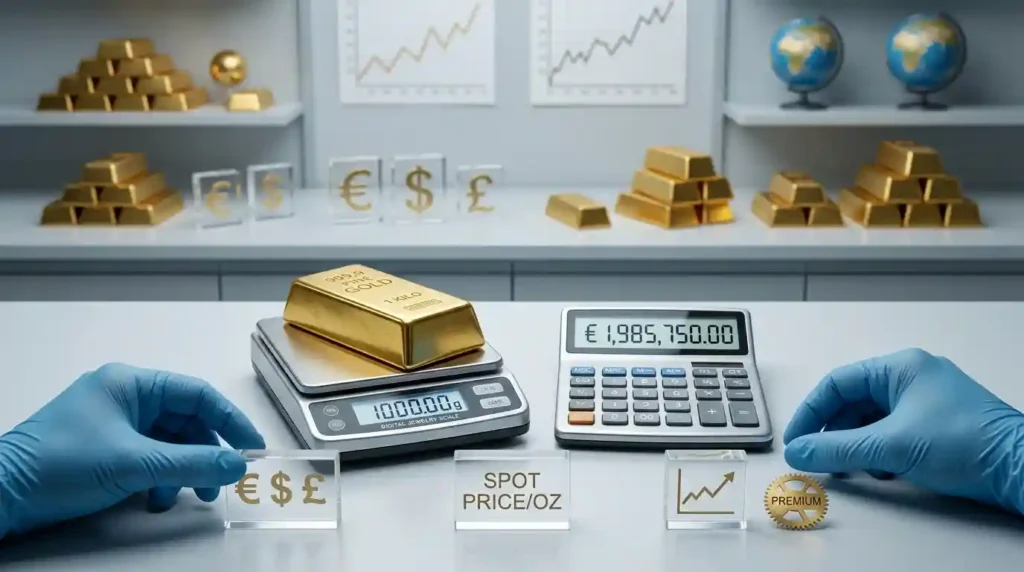
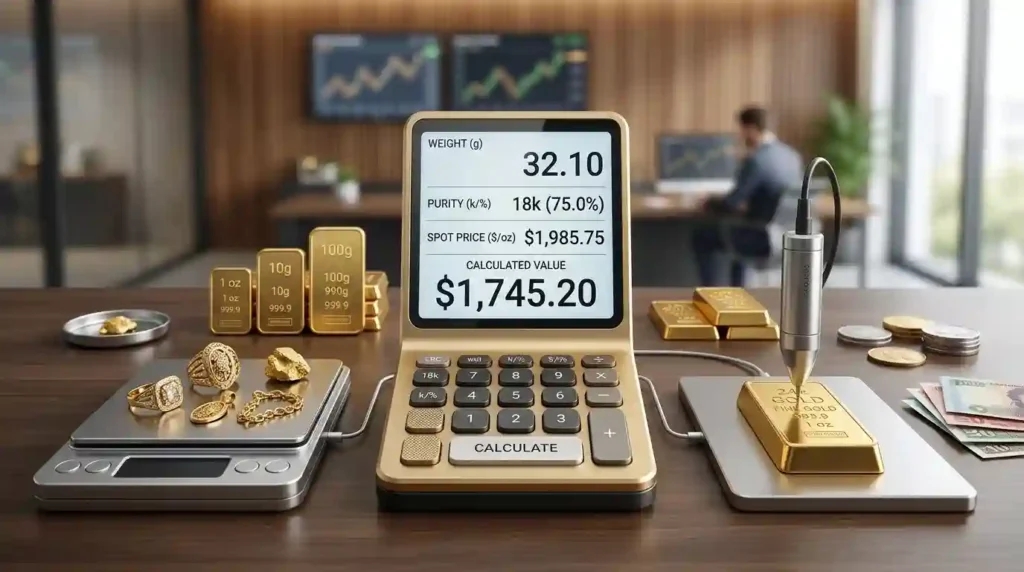
[ \text{Estimated gold value}=\text{Weight}\times\text{Price per gram of pure gold}\times\text{Purity} ]
Weight and price must use the same unit. Enter purity as a decimal. Here is a hypothetical example. Say pure gold costs $100 per gram.
- A 10 gram 18K item holds about 7.5 grams of gold. Its spot-based value is 10 × 100 × 0.75 = $750.
- A 10 gram 24K item at 99.9% purity has a spot-based value of 10 × 100 × 0.999 = $999.
These are made-up numbers, not current prices. They leave out retail premiums, labor, stones, taxes, and resale deductions. For live numbers, check gold price data sources. Try our gold calculator with your own weight.
Compare Gold Content in Equal-Weight Items
Comparing equal weights isolates the effect of purity. It does not mean two finished pieces will have the same retail price. The table below shows how much pure gold each item holds. I use it to show new buyers the real gap.
| Total item weight | Gold type | Approx. pure-gold content |
|---|---|---|
| 10 grams | 18K | 7.5 grams |
| 10 grams | 24K at 99.9% | 9.99 grams |
| 20 grams | 18K | 15 grams |
| 20 grams | 24K at 99.9% | 19.98 grams |
Why Jewelry Prices Can Differ Even at the Same Karat
Two 18K items can have very different tags. Here is why.
- Brand and craft.
- Design complexity and labor.
- Gemstones and decorative parts.
- Store markup and policies.
- Product premiums and resale demand.
A high retail price does not mean a high resale offer. Resale buyers focus on metal value first. For more on this gap, see our guide to the value of gold per ounce.
Is 18K or 24K Gold Better for Everyday Wear?
Match the gold to your real routine. A necklace worn now and then has different needs from a ring that bumps shopping carts, gym gear, and kitchen counters. Let me go through the common cases.
Best Gold for Engagement Rings and Wedding Bands
18K gold is often chosen for fine jewelry and engagement rings. It balances gold content, color, and strength. Ring design, stone setting, and alloy mix all matter too.
You may also want to compare 14K gold. It can offer more durability and a lower price. Our guide on what first-time gold buyers should check can help you compare options.
Choosing Gold for Necklaces, Earrings, and Bracelets
Earrings and pendants face fewer knocks than rings. So you have more freedom there. Thin chains can still stretch or bend if pulled or snagged.
Bracelets rub against desks, watches, and other surfaces. So think about the design, the weight, and how often you will wear it. Do not pick by karat alone.
Gold for Special Occasions or Cultural Jewelry
Some buyers like 24K for its high purity and rich yellow color. Culture and personal taste often shape this choice. That is a fine reason.
Ask yourself if the piece is for rare wear, display, or daily use. A piece worn a few times a year can be softer. A daily piece should be tougher.
Quick Decision Table: Which Gold Should You Choose?
This table is a starting point, not a strict rule. The best choice still depends on the exact design and how you will wear it. I made it short on purpose.
| Your priority | Option to consider | Why |
|---|---|---|
| High gold content | 24K | Very high purity |
| Fine jewelry with a rich gold tone | 18K | High gold content and broad design options |
| A ring for frequent wear | 18K or 14K | Alloy and design can offer a practical balance |
| Bullion or gold bars | High-purity gold | Metal content is central to the product’s purpose |
| Lower initial jewelry cost | Compare 14K and 18K | Lower gold content may reduce the metal cost |
How to Check Whether Gold Is Really 18K or 24K
Hallmarks are helpful clues. But a stamp alone is not absolute proof. This section shows sensible checks to run before you spend your money.
Look for Gold Purity Marks
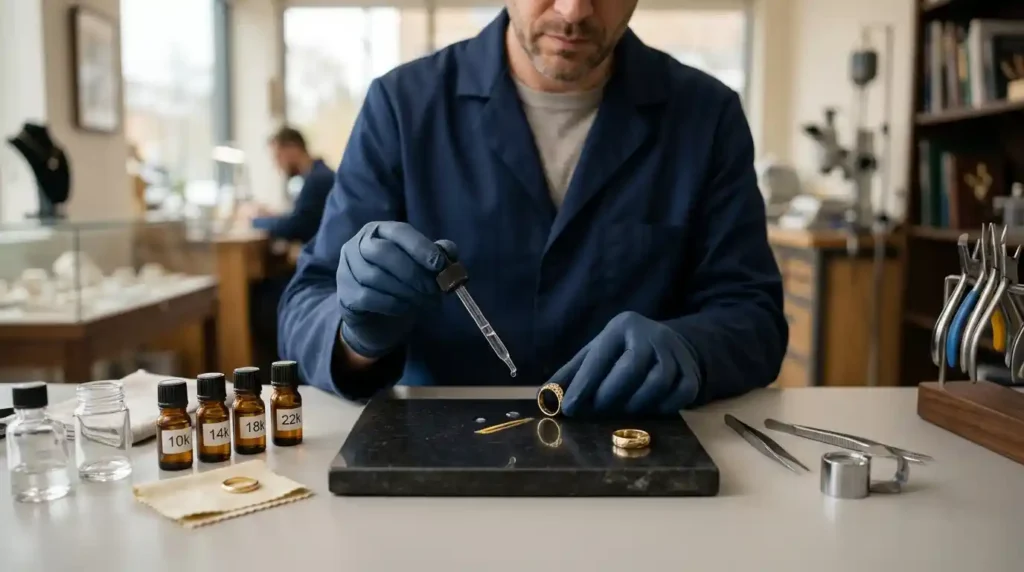
Check for 18K, 18KT, or 750 on an 18K item. Look for 24K, 999, or 9999 on high-purity gold, where they apply. Inspect the inside of rings, clasps, and other quiet spots.
Marking rules can vary. So if you see a mark you do not know, look it up. Our guide on first-time buyer checks explains more marks.
Check the Seller’s Information
Ask for a receipt that clearly states the karat or fineness. Read the return and refund policy before you pay. Ask whether the item is solid gold, hollow, plated, or gold-filled.
For online buys, read the full description and the seller details. The FTC advises buyers to check karat marks and the maker’s trademark. It also separates solid gold from gold-plated and gold-overlay items. Watch out for sellers who use vague words. Our guide to gold buying scams lists the signs.
When Should You Get Gold Professionally Tested?
Get a test in these cases.
- The mark is missing, unclear, or does not match the seller’s claims.
- You are valuing inherited jewelry or making a high-value purchase.
- You plan to sell and need a reliable estimate.
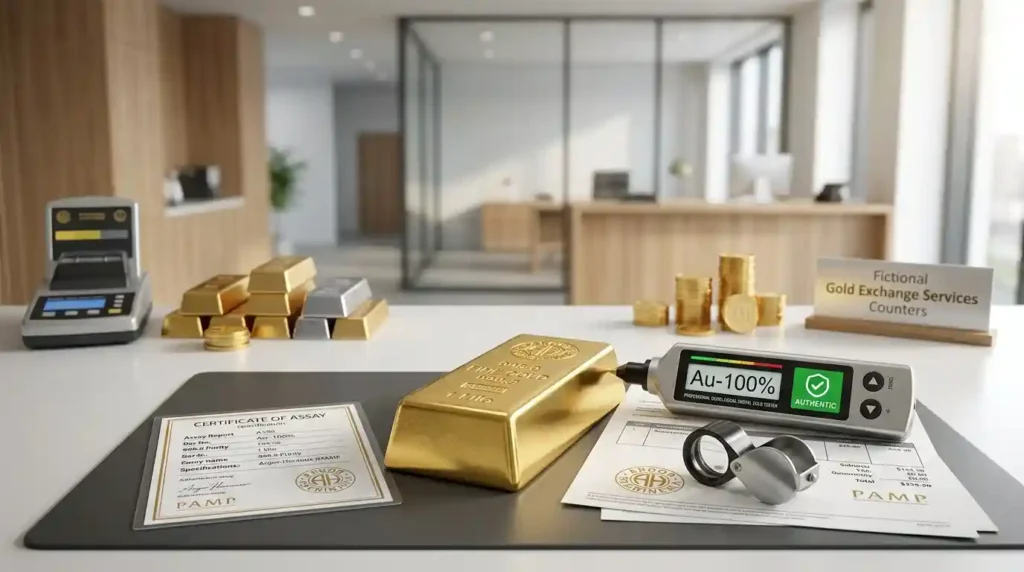
Visual checks and household tests cannot prove purity with certainty. A pro can use proper tools. A small fee is worth it before a large deal.
Expert Advice and Trusted References
I never want you to rely only on store marketing. So here are credible sources that explain purity, durability, and consumer protection. Use them to check anything you read, including this guide.
What the FTC Says About Gold Purity
The FTC has a consumer guide to buying precious metal jewelry. It explains that karat marks show gold content. It also says pure gold is soft, which is why other metals are often added for jewelry. I keep this guide in mind whenever I look at a mark.
What the U.S. Geological Survey Explains About Karats
The USGS explains karat as the share of gold in 24 parts. This is a strong source for the purity math in this guide. It also helps explain the gap between 18K and 24K.
GIA Guidance on Gold Alloys
The GIA explains how alloys change the color and properties of jewelry. It covers the use of different metals in yellow, white, and rose gold. If you want to know why 18K can look so different from piece to piece, start there.
How to Read Industry Guides
Many jewelers publish karat guides. These can be useful. But remember that a retailer has a business interest. Treat such guides as an industry view and not as a replacement for independent sources like the FTC, USGS, and GIA.
I have not invented any expert quotes in this article. If you add a direct quote, copy it from the original page and check the exact wording first.
Frequently Asked Questions About 18K and 24K Gold
Here are short answers to common questions. They are handy if you are comparing gold on your phone in a store. For more topics, visit our gold blog.
Is 18K Gold Better Than 24K Gold?
Neither is always better. 18K gold has 75% gold and is often more practical for jewelry, since alloy metals can add hardness. 24K gold has much higher purity but is softer. The right choice depends on the item and your priorities.
Is 24K Gold More Valuable Than 18K Gold?
For the same total weight, 24K gold usually has a higher gold content value. But the retail price or resale offer also depends on product type, premiums, craft, condition, and demand. See our post on why gold prices change for the market side.
Can You Wear 24K Gold Every Day?
You can. But its softness makes it more likely to bend, dent, or scratch. Think about the design and how much wear it will see. For rings or pieces that get knocked often, compare 18K and other alloys.
Does 18K Gold Tarnish?
Gold resists corrosion. But the other metals in an 18K alloy may react to chemicals or the environment. The result depends on the alloy, the finish, and care. White gold may also have a rhodium coating that wears over time.
Is 18K Gold Real Gold?
Yes. 18K gold is real gold. It holds 75% gold by weight. The rest is other metals. The key is to check the mark and confirm that the item is authentic.
What Does 750 Mean on Gold Jewelry?
A 750 mark generally means 750 parts gold per 1,000 parts by weight. That is 75% gold, which matches 18K.
How Can I Calculate the Value of 18K Gold?
Multiply the item’s weight by the current gold price for the same weight unit. Then multiply by 0.75. This gives a spot-based gold content value before labor, markup, fees, stones, or resale deductions. Our guide on how to calculate gold price per gram shows each step.
Which Gold Is Best for Investment: 18K or 24K?
For bullion, high-purity products are more directly tied to gold content. An 18K jewelry item includes design and labor costs that you may not recover when you sell. Compare premiums, authenticity, ease of resale, and terms before you buy. Our guide to the cheapest place to buy gold in the USA can help.
Final Recommendation
I have spent years helping people read karat marks and compare gold prices. My advice on what is the difference between 18K and 24K gold is simple. Choose 24K when you want the highest purity and can handle a softer metal. Choose 18K when you want fine jewelry that holds up better to daily life. Always check the mark, the receipt, and the return policy. Test costly pieces. You can learn more about me on my author page. Remember that a higher karat does not make a piece a better fit for you. The right gold is the one that suits how you will wear it and what you can afford.
Use a Gold Purity Calculator to Compare 18K and 24K
Enter the weight and purity of your gold item in our gold purity and value calculator. It will estimate the pure gold content and the spot-based value. A calculator helps you compare numbers. It does not prove that jewelry is real, and it cannot promise a resale offer. Check your gold’s purity and estimated value with our calculator. Compare the numbers before you buy, sell, or choose your next piece of jewelry. You can also read how gold calculators work first.