Picture a quiet Saturday morning in Minneapolis. You find an old gold ring in a drawer. You want to know its worth before you visit a jewelry store or a local gold buyer. You type in a few numbers, and a dollar amount pops up.
But where does that number come from? Let me show you how the gold calculator works. It uses weight, purity, and a gold price to estimate the value of the metal. I have checked many rings and chains this way, and the math is simpler than most people think.
In this guide, we will cover the inputs, the formula, a worked example, price updates, limits, and simple checks. One note first. A calculator gives an estimate. It does not prove your gold is real. It also does not promise what a dealer will pay.
What Is a Gold Calculator?
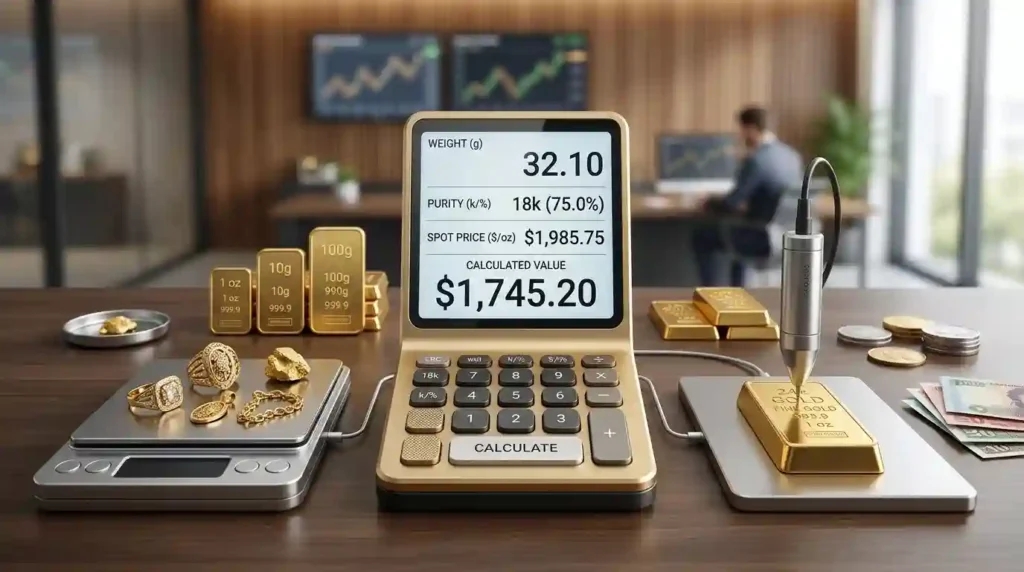
A gold calculator is a simple tool. It estimates the value of the gold inside an item. It does this with three facts: how much the item weighs, how pure the gold is, and what gold costs today.
Most people use a gold value calculator before they sell or buy. It gives you a fair starting point. You can then walk into a shop with a clear idea of what the metal is worth.
What Does a Gold Calculator Actually Calculate?
A gold calculator estimates the value of the gold in your item. It looks at the metal only. It does not look at the style, the brand, or the story behind the piece.
First, it finds how much pure gold is in the item. Next, it turns the gold price into the unit you chose, such as grams. Then it multiplies the two numbers.
You can use it for jewelry, scrap gold, coins, and bars. The idea is the same for each. Weight, purity, and price drive the result.
Who Should Use a Gold Calculator?
Many people find these tools helpful. Here are the most common users.
- People who want to sell old rings, chains, bracelets, or broken jewelry.
- Buyers who compare gold coins or bars.
- Shoppers who want to check a price quote on a new piece.
- Anyone who has offers from more than one gold buyer.
I often hear from people who feel nervous about selling gold. A quick estimate helps. It gives you calm and a number to work from.
Limits of a Gold Calculator
A calculator is helpful, but it has clear limits. It cannot tell you these things.
- Whether a piece is real gold.
- Whether a purity stamp is true.
- The exact price a dealer will pay.
- The full value of an antique, a collectible, or a designer piece.
Think of it like a kitchen scale. It gives you a number. It does not tell you if the food is fresh.
There is also a big gap between an estimate and an appraisal. An appraisal comes from a trained person who inspects the item. A calculator only does math on what you type in. Market price tools, such as the one at Kitco, describe their results in a similar way, as estimates based on market prices.
How Does a Gold Calculator Work Step by Step?
Let me walk you through the steps in the same order you would use on a real online tool. Each step is short. If you follow them, you can also check any tool you find.
Enter the Gold Weight
Start with the weight of your item. Most tools let you pick a unit. You may see grams, troy ounces, or pennyweights.
The unit matters. It must match the unit of the gold price. If your weight is in grams, the price must be per gram.
Be careful with gems. Stones are not gold. If you can, remove them or take their weight out. Otherwise your estimate will run too high.
Select the Gold Purity
Next, choose the purity. This is often shown in karats, such as 24K, 22K, 18K, or 14K.
Karat tells you how much of the item is gold. A full piece has 24 parts. So 18K gold has 18 parts gold out of 24. That is 75 percent.
The rest is other metal. Makers add it to make gold harder and stronger. Pure gold is soft, so most jewelry is mixed.
Check the Gold Price
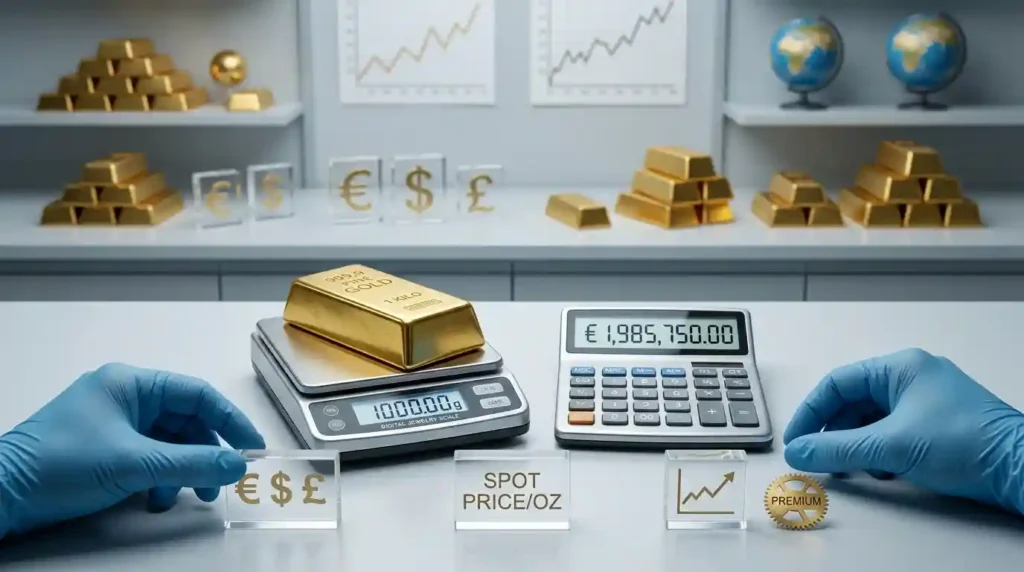
The tool also needs a gold price. Most use the spot price. This is the market price for gold at that moment.
Some tools pull live data. Others ask you to type in a price. Look for the time stamp, the currency, and the unit. A price per ounce is not the same as a price per gram.
I always check this first. A stale price is the easiest way to get a wrong number.
Calculate the Estimated Value
Now the tool does the math. It changes your weight to the right unit. It applies the purity. Then it multiplies by the gold price.
The result shows in your chosen currency, often U.S. dollars. It is a metal value. It is the worth of the gold inside, before any fees or dealer costs.
The steps are the same for every tool. Only the screen looks different.
Interpret the Result
The last step is the most missed. Ask what the number means. It may be the metal value. It may be a retail cost. It may be a guess at a sale payout.
Check if fees, dealer margins, or extra costs are included. Many tools show metal value only. If so, a buyer may offer less.
A simple picture helps here: Weight, then Purity, then Gold Price, then Formula, then Estimated Value. Keep that chain in mind.
The Formula a Gold Calculator Uses
Here is the good news. You can do this math by hand. Once you see the formula, the tool is no longer a mystery. You can repeat it with a pen and a phone calculator.
The Basic Gold Calculator Formula
The main gold calculator formula is short.
Gold value = Weight × Purity × Price per unit of pure gold
Weight and price must use the same unit. If you use grams, use a price per gram. If you use troy ounces, use a price per troy ounce.
Mixing units is the top error I see. A gram weight times an ounce price gives a wild answer. Always match them first.
Turning Karat Into a Purity Decimal
To use the formula, turn karats into a decimal. Divide the karat by 24.
Purity factor = Karat ÷ 24
- 24K is 1.000 in a simple calculation.
- 22K is about 0.9167.
- 18K is 0.7500.
- 14K is about 0.5833.
These are rounded. Real items may test a little higher or lower. A lab test or a hallmark can give a finer figure.
Converting Spot Price Into Price Per Gram
Gold is often quoted per troy ounce. That is a special weight used for precious metals. One troy ounce equals about 31.1035 grams.
To get a price per gram, divide the ounce price by 31.1035. The answer is the price for one gram of pure gold.
For example, if gold were $4,000 per troy ounce, one gram would be about $128.61. This is only a made-up price to show the math.
When a Calculator Uses a Different Formula
Some tools use other steps. One may turn all weights into troy ounces first. Another may find the pure gold weight before it applies the price.
Both ways can give the same answer. They match when the units and purity rules are the same.
If two tools differ, do not panic. Check the units and the purity rules. That is usually where the gap comes from.
The table below lists common purity values. Purity decides how much of an item’s weight is gold. Use it to confirm the setting on your tool. All percentages are rounded.
| Gold purity | Gold content | Common fineness mark |
|---|---|---|
| 24K | About 99.9% or higher, depending on grade | 999 or 999.9 |
| 22K | About 91.67% | 916 or 917 |
| 18K | 75% | 750 |
| 14K | About 58.33% | 585 or 583 |
| 10K | About 41.67% | 417 |
The World Gold Council publishes a useful reference on gold jewelry purity. It is a good place to confirm these fineness conventions.
Worked Example: How a Gold Calculator Estimates Value
Numbers make this real. Let me use two simple cases. The prices here are made up for teaching. They are not live market prices, so please do not use them to buy or sell.
An 18K Gold Ring Example
Say a ring weighs 10 grams. It is stamped 18K, so its purity is 75 percent. Let us use a made-up price of $130 per gram of pure gold.
First, find the pure gold weight. That is 10 × 0.75, which equals 7.5 grams.
Next, multiply by the price. That is 7.5 × $130, which equals $975.
So the estimated metal value is $975. This is the worth of the gold content. It is not a promised offer from a buyer.
A 14K Gold Chain Example
Now try a chain. It weighs 20 grams and is stamped 14K. The purity factor is 14 ÷ 24, which is about 0.5833.
The pure gold content is about 11.67 grams. Use the same made-up price of $130 per gram.
The estimated metal value is about $1,516.67.
Notice how a heavier item with lower purity can still be worth more. Weight and purity work together. You need both to get a fair figure.
Why Two Gold Calculators Show Different Results
You may try two tools and see two answers. That is common. Here are the usual reasons.
- The price feeds or update times are different.
- The purity rules are different.
- The units or rounding rules are different.
- One tool adds dealer payout rates or retail extras.
I suggest you run your numbers by hand once. If your math sits between the two tools, both are likely fine.
This table shows more examples. Use it to check whether your own math is in the right range. All prices are made up for teaching, and none are current gold prices.
| Item | Weight | Purity | Estimated metal value |
|---|---|---|---|
| 18K ring | 10 g | 75% | $975.00 |
| 14K chain | 20 g | 58.33% | About $1,516.67 |
| 22K bracelet | 15 g | 91.67% | About $1,787.50 |
The math assumes $130 per gram of pure gold. It uses exact purity fractions where needed.
Live Gold Prices and Calculator Results
You may own the same ring today and next week. Yet the number on the screen can change. The reason is the gold price. It moves during the day, and a good tool follows it.
Understanding the Gold Spot Price
The spot price is a market reference for gold. It shows what traders pay for gold right now. It is often quoted as XAU/USD, which means one ounce of gold priced in U.S. dollars.
Spot price is not the price of a finished ring. A ring costs more because of design, labor, and shop costs. Spot price is only the base.
Price Update Frequency in Gold Calculators
Tools update at different speeds. Some refresh on their own all day. Others use delayed data. Some ask you to type in a price.
The last updated time is key. If it is old, the result may be off. I never trust a number without a clear time stamp.
Currency Conversion and Your Result
Many prices start in U.S. dollars. A tool may change them into another currency. Then two things move the result. One is the gold market. The other is the exchange rate.
Keep them apart in your mind. Gold can stay flat while the exchange rate shifts. Also, real deals may add fees or exchange spreads.
Checking Whether a Gold Price Is Current
Here is a quick way to check a price.
- Compare the tool’s time stamp with a trusted market source.
- Confirm if the price is per gram or per troy ounce.
- Ask if it is a bid, an ask, or a midpoint price.
Kitco’s live gold price page is a good example. It shows spot prices, prices per unit, and values adjusted for purity. I use it as a reference point. I do not claim every tool uses the same feed.
Using a Gold Calculator Correctly
A few habits will make your results much better. Follow this simple routine before you visit a jeweler, check a quote, or buy online. Good inputs matter as much as good math.
Measure the Weight Accurately
Use a digital scale for a first estimate. Write down the unit and the decimals. A small scale error can shift the value.
Separate stones and other parts when you can. Keep in mind that a home scale cannot show purity. It only shows weight.
Confirm the Karat or Fineness
Look for stamps on the item. Common ones are 585, 750, and 916. They match 14K, 18K, and 22K.
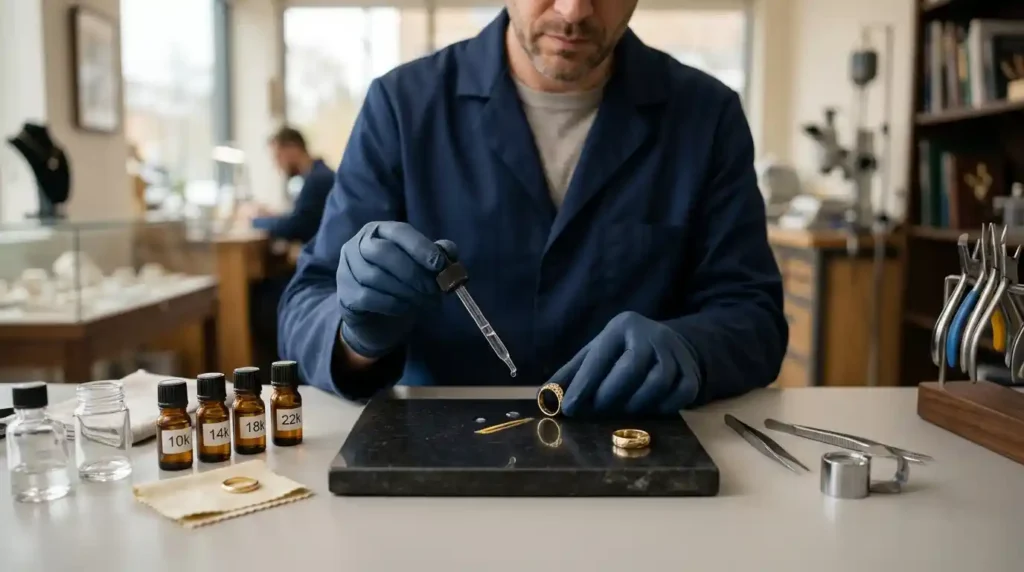
A stamp is a clue. It is not proof. If you are unsure, get the item tested by a trusted pro.
Enter the Correct Price and Currency
Match the price unit to the weight unit. Check if the price is for pure gold. Do not pair a 24K spot price with an unadjusted 14K weight.
The purity step fixes this. It scales the price down to match your item.
Save the Result and Compare Quotes
Write down your estimate. Then ask each buyer how they reach their offer. Compare the final amount after any stated fees.
A clear answer is a good sign. A vague answer is a reason to ask more.
Use this checklist as a final check. In a real deal, the quality of your inputs matters as much as the math.
| Input | What to check | Common mistake |
|---|---|---|
| Weight | Correct unit and gold-only weight | Including stones |
| Purity | Karat or fineness | Assuming every piece is 24K |
| Price | Current or clearly labeled manual quote | Using an outdated price |
| Currency | Correct conversion | Mixing USD and another currency |
| Result type | Metal value or payout estimate | Treating melt value as a guaranteed offer |
Why Is the Gold Calculator Value Different From a Dealer’s Offer?
This is the question I hear most. A tool shows one number. A shop offers another. Both can be honest. They measure different things.
Gold Melt Value vs. Retail Price
Melt value is the estimated worth of the gold inside an item. Retail price is what a shop charges for the finished piece.
Retail prices include design, labor, brand, and shop costs. So a buyer will not pay the original store price for used gold. They look at the metal.
Reasons Gold Buyers Pay Less Than Melt Value
Buyers have costs. That is why offers are often below melt value.
- Refining and processing fees.
- Business costs and resale risk.
- Dealer margins and payout rules.
- Test doubts or deductions for non-gold parts.
This does not mean a buyer is unfair. It means the buyer must make a profit to stay open.
Coins, Collectibles, and Designer Jewelry
Some items are worth more than their metal. A rare coin may have collector value. Condition and rarity matter a lot.
A designer piece may carry a brand premium. Fine craft can add value too. A basic calculator cannot see any of this. For these items, ask a qualified appraiser.
Comparing Two Gold Buyer Offers
Ask each buyer for an itemized quote. It should show the weight, the purity, the price used, and any fees. Then compare the final amount, not just the headline number.
This table shows the difference between the value of the metal and what you may be paid. These are separate figures, and a fair comparison keeps them apart.
| Price type | What it means | Main factors |
|---|---|---|
| Spot value | Market reference for pure gold | Market price |
| Melt value | Estimated gold content value | Weight, purity, spot price |
| Retail price | Cost to buy a finished item | Craftsmanship, overhead, premium |
| Dealer offer | Amount a buyer offers to pay | Melt value, margin, condition, demand |
My advice is simple. Get it in writing. Then compare the final amount.
Common Gold Calculator Mistakes to Avoid
Small errors can cause big gaps. I have seen each of these more than once. They are easy to fix when you know what to look for.
Confusing Regular Ounces With Troy Ounces
A regular ounce is not a troy ounce. A regular ounce, called avoirdupois, is about 28.35 grams. A troy ounce is about 31.1035 grams.
Gold uses the troy ounce. If you mix the two, your answer will be off. Pick one unit and stay with it from start to finish.
Entering the Karat Number as Purity
Some people type 18 as the purity. That is wrong. The tool needs a decimal.
For 18K, use 18 ÷ 24, which is 0.75. Do not multiply by 18. That would give a number far too large.
If a tool has a drop-down menu for karats, it does this step for you. Still, check that the setting is right.
Forgetting Stones, Clasps, and Other Materials
Total weight may include more than gold. Gems, glue, springs, and clasps can add weight. Some of these are not gold at all.
If you cannot separate them, do not guess. Ask a trained pro for an assessment. A small error here can lift your estimate by a lot.
Assuming the Calculator Authenticates Gold
A calculator does math. That is all. It trusts what you type in.
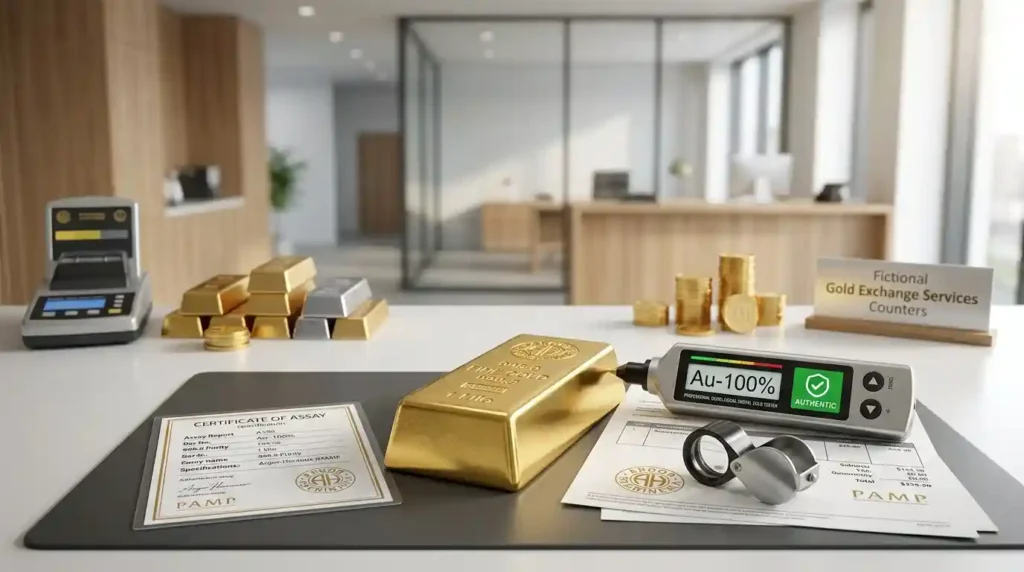
A hallmark or an online estimate cannot prove a piece is real. Plated items can carry a gold stamp. If you doubt a piece, get it tested before you act on any number.
Trusting a Result Without Checking Assumptions
Take a minute to review the basics before you rely on a number.
- Check the price time stamp.
- Confirm the purity and the units.
- Look for fees or payout cuts that are not clear.
This habit takes two minutes. It can save you real money.
Choosing a Reliable Gold Calculator
Not every tool is built the same. Some are clear and honest. Others hide how they work. Learn to judge the tool, not just the number it shows.
Transparent Formulas and Price Sources
A good tool explains its math. It tells you where its price comes from, or it lets you type in your own price. It also states its purity rules.
If you cannot find this, be careful. A tool that hides its method is hard to trust.
Units, Currency, and Update Times
Look for a few key features.
- Support for grams and troy ounces.
- A clear choice of U.S. dollars or another currency.
- A visible time stamp for live prices.
These small details show care. They also make your check much easier.
Tools That Explain Their Limits
The best tools are honest. They separate metal value from retail value. They say that dealer payouts vary. They do not promise a resale price.
I trust a tool more when it admits what it cannot do. Big promises are a red flag.
A Second Source to Verify the Estimate
Never rely on one number. Redo the math by hand. Then compare the market price with a known gold price source.
If the gap is large, find out why before you buy or sell. Most gaps come from a unit mix-up or an old price.
For your own site or blog, add the author’s background, a last reviewed date, and a short note on the method. State clearly if prices are live or typed in by hand. Do not claim to be an appraiser or tester unless you truly are.
Expert Advice for Using a Gold Calculator in the United States
Now let us tie the math to real choices. If you plan to sell old gold or compare jewelry prices in the U.S., a few local facts help. They give you more confidence at the counter.
U.S. Gold Karat Standards
In the United States, 10K is generally the lowest karat that can be sold as gold jewelry. You will often see 14K, 18K, and 24K too.
Do not mix up karat and carat. Karat measures gold purity. Carat measures the weight of gems. They sound alike, but they mean different things.
Gold Markings and Seller Information
The Federal Trade Commission offers clear consumer guidance on buying platinum, gold, and silver jewelry. It explains karat marks, gold quality, and how to research a seller. It also covers return policies. I treat it as my main U.S. consumer reference.
Check the seller’s name and record. Read the return policy. Look at the markings with care. Claims on a tag are not proof.
Professional Assessment When Needed
For a valuable or disputed item, get independent testing. For antique, collectible, or designer pieces, find a qualified appraiser.
For any large deal, ask for a written quote. It protects you and the buyer. It also makes it easy to compare offers.
Frequently Asked Questions About How Gold Calculators Work
Here are short answers to the questions I hear most. Each one is meant to stand alone.
Is a Gold Calculator Accurate?
The math can be exact. The estimate depends on your inputs. You need the right weight, purity, price, and units. If any one is wrong, the result will be wrong too.
Does a Gold Calculator Use Live Gold Prices?
Some do. Others use delayed prices or ask you to type one in. Always check the update time on the screen.
Can I Calculate the Value of 14K or 18K Gold?
Yes. Multiply the weight by the purity factor. Then multiply by the price per unit of pure gold. For 14K, use about 0.5833. For 18K, use 0.75.
Is Gold Melt Value the Same as Resale Value?
No. Melt value is the worth of the gold content. Resale money depends on the buyer, the item, and the deal terms.
Can a Gold Calculator Tell Me if My Gold Is Real?
No. It only does math on what you enter. It cannot test an item. Use a trusted tester for that.
My Gold Calculator and the Jewelry Store Disagree. Why?
There are a few likely reasons. The market price may differ. The purity rule may differ. The weight may differ. The store may add a retail premium or a dealer margin.
Difference Between a Gold Calculator and a Gold Price Calculator
The names overlap. A gold price calculator often converts a market price from one unit to another. A gold value calculator estimates the worth of one item from its weight and purity.
Final Practical Step: Test the Calculator With Your Own Numbers
Now try it yourself. Enter a weight you know and a purity you trust. Check the price unit and the time stamp. Then do the math by hand and compare the two results.
When the numbers match, you can use the tool with more confidence. Visit our gold calculator and give it a go. Results are estimates only. They are not guaranteed offers or professional appraisals.
Final Recommendation
After years of checking rings, chains, and coins, I keep one rule. Understand how the gold calculator works before you trust it. Know your weight, your purity, and your price unit.
Use the tool as a guide. Do the math by hand once. Then ask every buyer how they set their offer.
I am not an appraiser, and a calculator is not one either. For rare or costly pieces, get a pro to test them. With these steps, you can sell or buy with a clear head.