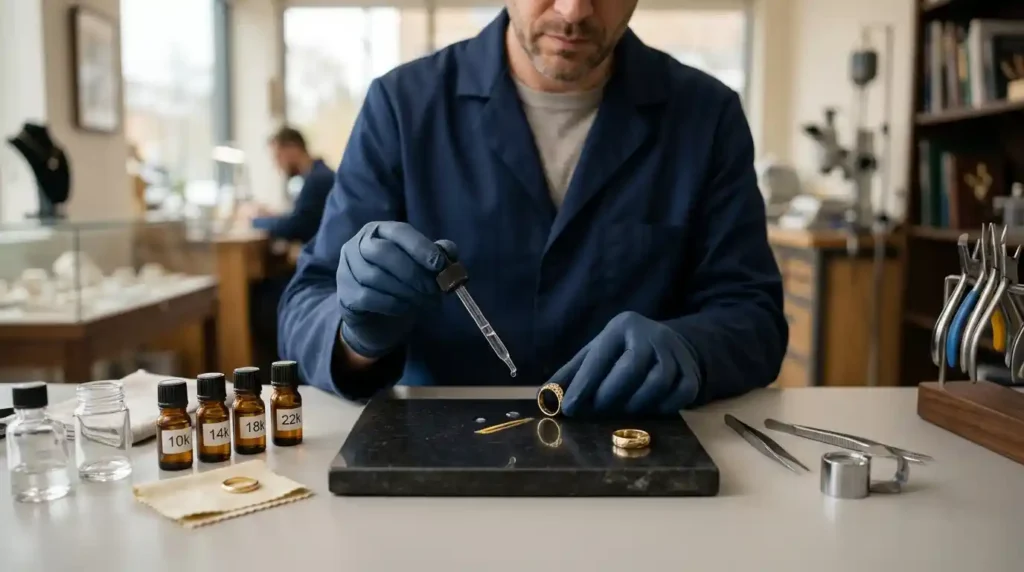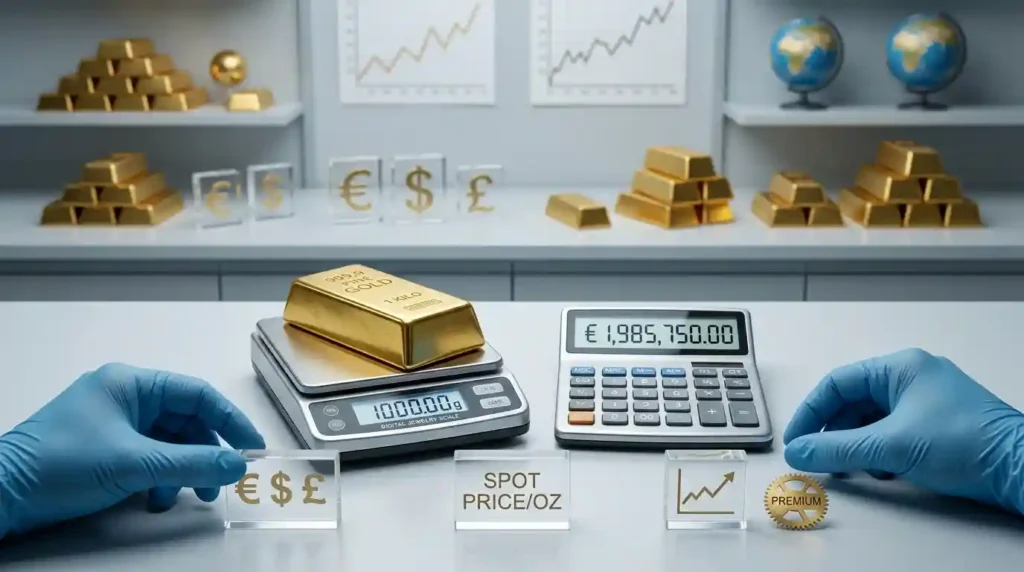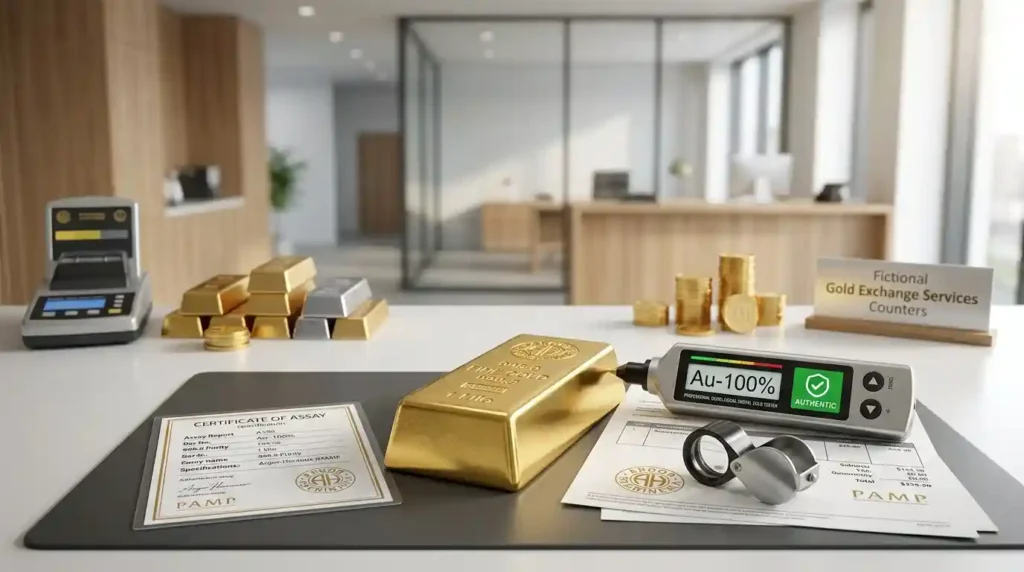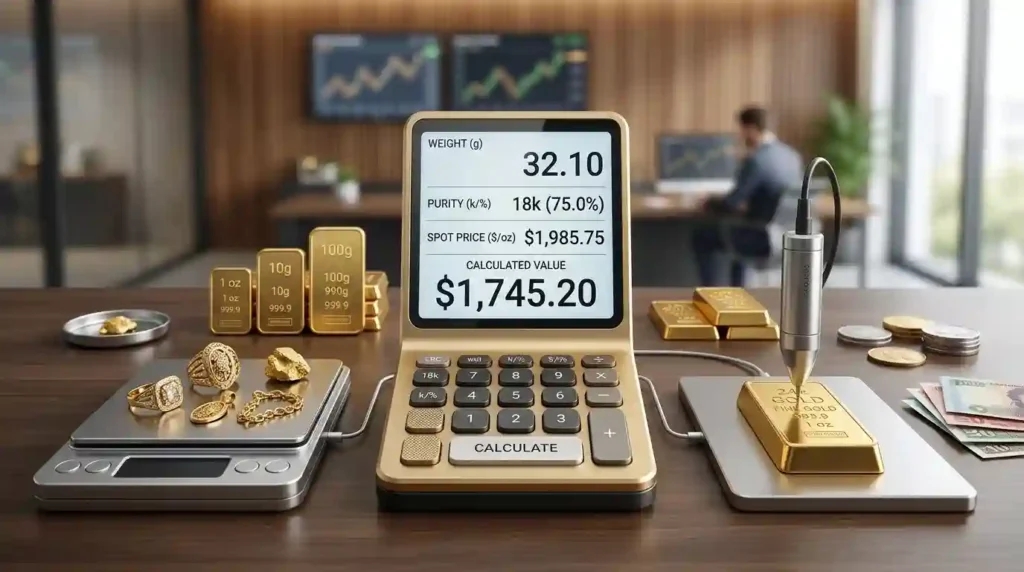
It is Sunday evening in Portland, and a news headline says gold just hit a record high. You wonder if you should buy a coin, open a brokerage account, or wait. The chart is moving, social media is loud, and nobody wants an expensive first mistake. I have felt that pull, so here is how to invest in gold for beginners in 2026 in plain words. Investing in gold does not always mean buying a bar and hiding it in a safe. You can also use physical bullion, certain exchange-traded funds, and gold-mining stocks. Each one has different costs, risks, and ownership rights. Our gold calculator can help you test the numbers. No one can promise a profit or name a perfect time to buy. The right path depends on your goals, your time frame, your risk comfort, and your budget. I will show you how to compare options, calculate costs, and avoid common scams. This guide is general education, not personal financial advice.
Is Gold a Good Investment for Beginners in 2026?
Start with the truth about what gold can and cannot do. Gold is not magic. It does not pay interest. It does not promise gains. But it plays a real role for some investors. So let us look at both sides before you pick a product.
I always tell readers to slow down at this step. A strong headline can make any asset look like a sure thing. It never is. Learn the role first. Then choose the tool. Our gold price guide can help you follow the market. If you want a quick look at what drives the numbers, read our guide on how the price of gold is calculated.
Why People Invest in Gold
People buy gold for many reasons. Here are the most common ones.
- To diversify a portfolio that holds mostly stocks and bonds.
- To gain exposure to changes in the price of gold.
- To own a tangible asset they can hold in their hands.
- To have something that may help during some periods of market or economic stress.
Gold can behave differently from some stocks and bonds. But that does not mean it always moves the opposite way. Sometimes both fall at the same time. So treat gold as one tool, not a shield against every storm.
Think of gold like a spare tire. You hope you do not need it, and it is not the whole car. It may help in some cases. It will not fix every problem. A portfolio with one tool is weaker than a portfolio with a few. Keep the role of gold small enough that a bad year does not wreck your plans. The World Gold Council outlines several roles that gold may play in a portfolio, including diversification.
What Beginners Should Know About Gold Investment Risks
Every investment has risk. Gold is no different. Please read these points with care.
- Gold prices can fall as well as rise.
- Physical gold has buying premiums, storage needs, and possible resale deductions.
- Gold does not pay dividends or interest.
- Gold-mining companies face business risks beyond the gold price.
- A high purchase price can make it harder to earn a profit after costs.
The U.S. Commodity Futures Trading Commission, or CFTC, cautions that gold should not be treated as a risk-free investment. I agree with that view. I have seen buyers pay a large premium and then wait years just to break even. Know the costs before you start.
Time frame matters here. Gold can stay flat or fall for long stretches. If you may need the money soon, gold may not be a good fit. If you can wait many years, short drops may matter less. But even then, there is no promise. Match your plan to the time you can truly wait.
Is Gold Better Than Stocks or Bonds?
No asset is better in every case. They do different jobs. Stocks give you a share in businesses. Bonds may pay interest. Gold exposure depends mostly on changes in its market value.
So avoid asking which one wins. Ask which one fits your plan. Look at your whole financial picture. Think about your income, your savings, your debts, and your goals. Do not invest on one headline.
It helps to write a one page plan. List your goal, your budget, your time frame, and how much gold you want. Then list what would make you change the plan. Maybe a job change or a big bill. Reading that page later keeps you steady when the news gets loud. A calm look at the full picture beats a rush into any single asset.
Here is a short story. A friend once asked me whether to put his whole bonus into gold after a big rally. I asked him three questions. What is the money for? When will you need it? How would you feel if it fell by a fifth? He had no clear answers. So he waited a few weeks and made a smaller plan. That pause saved him stress. A few good questions can do more than any chart.
The Main Ways to Invest in Gold
The best first step is to know what you are really buying. Compare ownership, ease, costs, and risk. A bar in a safe and a share in a fund are not the same thing. They have different rules and different risks. Let me walk through each choice.
Notice that each choice answers a different question. Bars and coins answer, can I hold it? ETFs answer, can I buy it easily? Mining stocks answer, can I bet on the business? Futures answer, can I use leverage? Your answer to those questions points to the right product.
Buy Physical Gold Bars
A bullion bar is valued by its weight and purity. A bigger bar holds more gold. Purity shows how much of the bar is real gold. For deeper reading on purity, see how gold purity is calculated.
Bars come with costs. You pay a dealer premium. You may pay for shipping and insurance. You need a safe place to keep the bar. And when you sell, you may face resale checks and deductions. Smaller bars often carry a higher percentage premium than larger bars. So a one gram bar may cost far more per gram than a big one.
Let me give a hypothetical case. Say a one ounce bar has a 3% premium over its gold value. A one gram bar may have a premium of 30% or more. The small bar is easy to buy but costly per gram. That is why I tell beginners to compare the premium percentage, not the sticker price. Our guide on calculating gold price per gram shows how.
Before you buy, verify the dealer. Check the product specs, and see how gold purity is calculated if the purity looks unclear. Ask about buyback terms.
Ask the dealer to quote the buyback price on the same day. This one request shows you the spread. A dealer who will not quote a buyback price is a dealer I would skip. Our guide to gold buying scams can help you spot trouble early.
Storage deserves a plan too. A home safe, a bank box, and a vault service all have costs and limits. Home storage may need extra insurance. A bank box may not be insured by the bank for your contents. Ask each provider what is covered. Do not assume anything. Also keep the purchase papers in a separate place from the gold.
Buy Gold Bullion Coins
Bullion coins are made to be priced near their gold content. Collectible, or numismatic, coins are different. Their price depends on rarity, condition, and demand. A beginner can find the second kind hard to judge.
Coin premiums can reflect the cost of making and shipping the coin. They can also reflect demand. Be careful with claims about rare coins. Those claims are hard to verify. Compare the coin’s price with the value of its gold content.
Here is a quick way to do it. Find the coin’s fine gold weight. Multiply it by the current spot price. That gives the gold value. Then compare it with the dealer’s price. The gap is the premium. If the gap is far above what other dealers charge, look elsewhere. The U.S. Mint explains how its bullion coin prices include the metal value plus a premium.
Some well-known coins carry lower premiums than others. Popularity matters. A coin that many dealers trade is easier to sell. A rare or odd coin may be slow to sell. Ease of resale is part of the real cost. Think about it before you buy.
Invest in Gold ETFs
A gold-backed ETF, or exchange-traded fund, can give you exposure to gold. You do not need to store bullion at home. You buy shares through a brokerage account, just like a stock.
But ETFs have costs too. There is an expense ratio. There may be trading costs. The trading price can differ a bit from the value of the gold the fund holds. Read the prospectus and the shareholder reports before you buy. The SEC’s Investor.gov explains that ETFs have fees and market risks.
Remember one key point. Owning ETF shares is not the same as taking delivery of your own gold bar. You own a share in a financial product.
This difference matters in a crisis. If a fund has trouble, you rely on the fund’s structure and the provider. If you hold metal, you rely on your own storage and a buyer. Neither is free of risk. Read how the fund holds its gold and who audits it.
Buy Gold-Mining Stocks or Funds
Mining stocks are shares in businesses. They are not physical gold. A mining firm has costs, debt, managers, and mines that may do well or poorly. Our post on the price of gold explains the metal side of the story. So its stock can move very differently from the gold price.
Sometimes mining stocks rise faster than gold. Other times they fall even when gold rises. Mining-stock ETFs are a separate group. They hold a basket of mining companies. They bring their own risks and fees. I treat mining stocks as a stock pick, not a gold pick.
A mining firm may have debt, labor costs, and rules that change by country. A mine can have a bad year even when gold is high. A new find can also lift a stock even when gold is flat. This mix of forces makes mining stocks harder to read for a beginner.
What About Gold Futures and Options?
Futures and options are complex products. They use leverage and margin. That means small price moves can create large gains or large losses. Losses can come fast.
For this reason, I do not see them as a first step for a beginner. I will not give a step-by-step guide for them here. If you ever want to learn about them, study the contract terms and the risks first. Talk to a qualified professional. Do not rush.
If you ever feel drawn to leverage, start by reading the exchange’s own education pages. Learn what margin calls are. Understand that you can lose more than you put in with some contracts. For most beginners, the simple products are enough.
Compare the Main Gold Investment Options
Before the table, think about what you value most. Do you want direct ownership, ease, quick selling, or simple cost checks? Costs vary by product and provider. So verify current fees before you invest. I use a table like this when I teach friends the basics.
| Investment type | Physical ownership? | Main costs | Beginner consideration |
|---|---|---|---|
| Gold bars | Yes | Premium, storage, insurance, resale spread | Must arrange safe storage |
| Bullion coins | Yes | Premium, possible shipping and insurance | Check bullion value versus collectible markup |
| Gold-backed ETF | Generally no direct personal possession | Fund expenses and trading costs | Review the prospectus and fund structure |
| Gold-mining stocks | No | Brokerage costs and company-specific risks | Not the same as owning gold |
| Gold futures/options | No direct ownership from the contract alone | Trading costs, margin, and contract-related expenses | Complex; losses can be substantial |
Minimum Budget: How Much Money Do You Need to Start Investing in Gold?
There is no single minimum that fits everyone. The right amount depends on the product, the costs, and your wider finances. I suggest you set a budget before you look at any price. That keeps you in charge.
A rule I like is to start small. Buy a small amount first. Learn how the process works. See how the costs feel. Then decide if you want more. A small first step costs little and teaches a lot.
Set a Gold Investment Budget First
Start with money that is free after bills and near-term needs. Do not borrow to buy gold. Do not swap your emergency fund for gold. An emergency fund needs to be easy to reach and stable.
Also think about spreading your savings. Putting all your money in one asset raises your risk. A balanced plan is safer than a bold bet.
Some planners suggest holding only a small slice of a portfolio in gold. Others hold none. There is no single right answer. What matters is that the amount fits your goals and your comfort. If a loss in gold would hurt your sleep, the slice is too big. If you are unsure, talk to a qualified financial professional.
Can You Invest in Gold With $50 or $100?
Possibly. Some brokerage products allow small buys, subject to account rules and platform minimums. Physical gold can be harder at a small budget. Premiums and delivery fees can take a bigger share of a small purchase.
So compare the total cost, not just the advertised price.
Some platforms let you buy a fraction of an ounce or a small number of shares. These can help if your budget is small. But check the fees and the rules. Ask who holds the gold and what happens if the platform closes. A low minimum is nice, but safety comes first. A $100 purchase with a $15 fee loses 15% before it starts. Our first-time buyer checklist lists the cost points to review.
Calculate Your Potential Purchase Cost
A simple calculator can help here. Enter your budget, the product price, the premium, and any known fees. Then see how much of your money goes into the gold itself.
Here is the basic formula.
[ \text{Total purchase cost}=\text{Gold value}+\text{Premium}+\text{Other fees} ]
For physical bullion, use this one to find the premium.
[ \text{Premium percentage}= \frac{\text{Purchase price}-\text{Comparable spot value}} {\text{Comparable spot value}}\times100 ]
Make sure the price and the spot value use the same weight unit, purity basis, and currency. Our gold calculators guide shows how to set this up. If you need help with units, read our guide on comparing grams, ounces, and pennyweights. You can also test your numbers with our gold calculator.
Let me add a tip on currency. If you buy from a seller outside the U.S., prices may be in another currency. Convert first. Then compare. Also watch for card fees on foreign sales. These small costs can change the result.
How to Invest in Gold Step by Step
Here is a clear process you can follow. The goal is not to buy gold today at any price. The goal is to make an informed choice. I use these six steps myself. Take your time with each one.
First, define your investment goal
Ask why gold interests you. Is it for diversification, long-term exposure, or physical ownership? Pick a time frame. Decide how much loss you could accept without losing sleep.
Do not base the whole choice on fear of inflation or one news story. A plan made in a calm moment beats a plan made in a panic.
Write the goal in one sentence. For example, I want a small gold position for the next ten years. A clear sentence helps you say no to deals that do not fit. It also helps you ignore noise on social media.
Second, choose the type of gold investment
Compare bullion, coins, ETFs, and mining stocks. Match the product to your goal and your skill level. Ask yourself whether you want direct possession or market exposure through a financial product.
If you want to hold metal, learn about gold price and jewelry price differences first, so you do not confuse jewelry with an investment.
Third, research the seller or investment provider
For physical gold, check the dealer’s history, policies, and independent reviews. For ETFs, use the issuer’s official fund papers and SEC filings. For brokerage services, check registration and background where it applies.
Be careful with unasked calls, social media pitches, and so-called exclusive deals. Real opportunities do not need secrecy or pressure.
Ask each provider how long they have been in business. Ask where they are based. Ask for a physical address and a phone number you can call. Then check them on your own. A few minutes of research can stop a very costly mistake.
Fourth, check the full cost
Compare the quoted gold price with the current spot price. Check the premium, shipping, insurance, storage, account fees, and selling costs. Ask how the provider buys back the product.
Keep a written record of the price and fee breakdown.
Take screenshots of the quote and the checkout page. Save the order email. If a problem comes up later, these records are your proof. I keep a folder for each purchase. For help reading quotes, see our post on gold price data sources and update times.
Fifth, make the purchase carefully
Confirm the product, weight, purity, price, and delivery or custody terms. Read all order terms before you pay. Keep invoices, records, and account statements.
Do not rush because of a countdown clock. Do not trust claims that gold will double soon. If a deal pushes you to act in minutes, step back.
Scammers know that urgency stops thinking. They may say the price is about to jump or that stock is almost gone. A real dealer can hold a quote for a short time. If not, you lose nothing by walking away.
Last, review your investment over time
Check your results against your first goal. Track costs and changes in your own needs. Do not make choices just because gold rose or fell in one day.
Reassess the role of gold when your life changes. A new job, a new home, or a new child may change what you need from your savings.
Set a calendar reminder to review once or twice a year. At each review, ask three things. Does gold still fit my goal? Are the costs still fair? Has my budget changed? Short reviews beat constant checking.
How to Use a Gold Investment Calculator
This is where the math turns a confusing quote into a clear estimate. A calculator can show you costs. It cannot predict returns. I use one before every purchase. It takes a few minutes and often reveals costs I would have missed. To see how these tools work, read about gold calculators.
Inputs a Gold Investment Calculator Should Include
A good tool asks for these items.
- Your investment budget.
- The gold spot price and the currency.
- Weight and purity, for physical gold.
- The dealer premium.
- Purchase and selling fees.
- Storage and insurance costs, where they apply.
- ETF expense ratio or brokerage charges, where they apply.
- Your holding period, for a cost comparison.
If a tool leaves out fees, treat its result as incomplete.
Also check that the tool states its date and price source. A result built on an old price may mislead you. Our guide to how gold calculators work lists signs of a trustworthy tool.
Example: Estimate the Cost of Buying a Gold Coin
Let us try a hypothetical case. It is for learning only. It is not a current quote.
- Spot-based value of the coin’s gold: $1,000.
- Dealer price: $1,070.
- Dollar premium: $70.
- Premium percentage: 7%.
So you pay 7% above the metal value. A real check must use the current spot price for the coin’s gold content. It must also add taxes, shipping, or other costs.
Now try your own. Pick a coin you are thinking about. Look up its fine gold weight. Multiply by the current spot price. Compare with the dealer’s price. Work out the premium. Do this for three dealers. You will often see wide gaps. That is the power of a calculator. For more on the spot value of gold by weight, read our guide on the value of gold.
Estimate a Break-Even Price
The break-even price is the rough sale price you need to recover your total cost. For physical gold, include the purchase premium and the likely selling deductions. For ETFs, include fund costs and trading costs.
Here is a hypothetical example. You pay $1,070 for a coin with $1,000 of gold value. Say a dealer would buy it back at 2% below its gold value. For the sale to return $1,070, the gold value would need to rise to about $1,092. That is a rise of about 9%. This is just an example, and real numbers differ.
No one can know future prices or sale deductions in advance. So treat a break-even as a rough guide.
A lower premium helps break-even a lot. Compare two coins. One has a 3% premium. The other has 8%. With the same selling costs, the first needs a smaller rise to break even. So shop for the lowest fair premium, not the fanciest box.
What a Gold Calculator Cannot Tell You
A calculator cannot tell you these things.
- Whether gold will rise next week.
- Whether a coin is genuine without proper testing.
- Whether an ETF fits your own financial plan.
- Whether a dealer’s promise is trustworthy.
- Your exact tax outcome without your own facts and the current rules.
Use the result as one input, not as a verdict.
Some calculators also project returns. Be careful with those. A projection uses assumed growth. Real growth can differ widely. If a tool shows a rosy chart with no warning, close the page.
What Fees and Taxes Should Gold Beginners Know About?
The purchase price is only part of the cost. Fees and taxes can change your result. Learn the common ones, and know where to check the rules before you sell or use a retirement account.
Common Costs of Physical Gold
Physical gold carries several costs.
- A dealer premium over spot.
- Shipping and delivery.
- Storage and insurance.
- Possible authentication or appraisal fees.
- The gap between the dealer’s selling price and buyback price.
That last gap is called the spread. It is a real cost. It decides how far the gold price must rise before you break even.
Here is a hypothetical case. A dealer sells a coin for $1,070 and buys it back for $980. The spread is $90. If you sold right away, you would lose $90. So the market would need to rise by that much just to put you even. Ask each dealer for both prices.
Gold ETF and Brokerage Costs
ETFs have their own costs.
- The expense ratio.
- Brokerage or trading fees, if any.
- The bid-ask spread.
- Possible gaps between market price and net asset value.
- Product-specific fees or limits.
Here is a hypothetical case. An expense ratio of 0.40% on $1,000 is about $4 a year. That may sound small. But it repeats every year. Over a long time, it adds up. Always read the fund papers.
Also check how a fund holds its gold. Some hold physical bars in vaults. Others use contracts. The structure changes the risks. The fund papers explain this in plain terms. Take time to read the summary page.
U.S. Tax Considerations
Tax rules differ by product. Physical precious metals, fund structures, mining stocks, and retirement accounts can be treated in different ways. I will not promise one tax rate for everyone.
Please read current guidance from the IRS and speak with a qualified tax professional about your own case. Be careful about the idea that gold is always taxed like stocks. It may not be.
If you hear about a gold IRA, know that eligibility, custody, and account rules matter. Not every gold product can sit in every retirement account. The IRS has special rules about collectibles in certain retirement accounts. There are exceptions for qualifying coins or bullion held under required custody terms. So verify before you move any retirement money.
Retirement rules are strict. A gold coin in a regular drawer is not the same as gold in an IRA. A custodian must hold the metal for the account in many cases. A tax pro can tell you what is allowed. A salesperson who pushes you to move money fast is a warning sign.
Common Gold Investing Scams and Mistakes to Avoid
Scams often use urgency, fear, or the promise of easy profit. My job here is to help you pause, check the facts, and walk away from a bad deal. For a longer list, read about gold valuation scams too.
Guaranteed Profit Claims
Watch for these red flags.
- “Gold can only go up.”
- “You will double your money.”
- Pressure to buy before a deadline.
No salesperson can guarantee future market prices. If someone does, that is your signal to leave. See how sellers misuse this tactic in our guide to gold valuation scams. I have never regretted walking away from a pushy pitch.
Hidden Fees and Overpriced Coins
Ask for every fee in writing. Compare the product’s price with its gold content. Be careful if someone claims collectible value without proof. And compare more than one reputable dealer.
A coin sold at a high premium can feel like a bargain if the seller tells a good story. The math tells the truth. Run the premium formula before you agree.
Ask for a total price in writing, with shipping and tax. Then compute the premium on the full price. A low premium on the coin plus a high shipping charge can still be costly. The final total is what counts.
Fake Storage or Gold IRA Offers
Verify who holds the metal and where it is stored. Check the custodian and provider details on your own. Do not use only the contact details a salesperson gives you.
Scammers may copy the names of real firms. They may use real looking sites. Look up the firm’s number from a source you trust, and call it. Confirm that the offer is real. A short call can stop a long headache.
Be wary of pressure to move retirement savings fast. Talk to a qualified financial or tax professional before any major retirement account change.
Where to Check a Dealer or Report a Concern
If someone says they are a regulated financial professional, check their registration and any record of discipline. Read the CFTC’s consumer advisories on precious metals. Use official complaint channels if you suspect fraud. Keep copies of ads, contracts, emails, and receipts.
If you lose money, file a report quickly. Agencies can act faster when you give clear records. Write down the dates, names, and amounts. A clean timeline helps a lot.
The CFTC warns about high-pressure sales, inflated prices, hidden costs, and misleading precious metals investment plans. Those warnings match what I have seen in the real world. Our guide on what first-time gold buyers should check adds a checklist for verifying a seller.
How to Compare Gold Investments Before Buying
Use a simple process. Do not pick the product with the loudest ad. A little homework helps you spot costs that are easy to miss. I keep a short worksheet for this.
Compare the Total Cost, Not Just the Gold Price
Compare each product’s price with its comparable gold value. Include premiums, fees, and the likely selling costs. Check the spread between the buy and sell prices. Use the same date, currency, and weight basis for a fair comparison. Our guide on the value of gold by weight can help.
If you buy bars or coins, our gold price per gram guide shows how to put every size on the same basis.
Build a Gold Investment Comparison Table
The table below lists evaluation criteria. It is not a ranking of specific products. The cheapest choice on paper may not fit your needs if it has other costs. Use the questions as a guide when you talk to any seller or fund provider.
| What to compare | Questions to ask |
|---|---|
| Total cost | What will I pay after all fees? |
| Gold exposure | Does the product track gold directly or depend on a company’s performance? |
| Liquidity | How easily can I sell it? |
| Ownership | Will I own physical metal or shares in a financial product? |
| Security | Who safeguards the asset or account? |
| Tax treatment | What rules may apply to my situation? |
| Seller reliability | Can I verify the provider independently? |
Should Beginners Buy Gold All at Once or Gradually?
A single purchase puts all your money in at one price. Buying in parts spreads your entry prices over time. That may feel calmer. But it does not guarantee a profit or prevent losses.
Think about fees, too. If each small purchase carries a flat fee, many small buys can cost more. So neither plan is always better. Pick the plan that fits your budget and your nerves.
Some buyers set a rule like buying a small amount each month. This turns a hard choice into a habit. It can help you avoid chasing headlines. But again, it does not remove risk.
Frequently Asked Questions About Gold Investing
Here are short answers to common questions. They are general and not personal advice. For more guides, browse our gold blog.
Is Gold a Good Investment for Beginners in 2026?
Gold may suit some investors as part of a diversified portfolio. But it can lose value, and it does not pay interest or dividends. Suitability depends on your goals, time frame, costs, and ability to handle losses.
What Is the Easiest Way to Invest in Gold?
If you already have a brokerage account, a gold-backed ETF may be convenient. It avoids home storage. Physical gold may suit someone who wants to own metal. Both need cost and risk checks.
If you hold gold in a brokerage account, also learn how the account is protected. Ask your broker what happens if the firm fails. Read the account terms. This extra step takes little time.
Can I Start Investing in Gold With $100?
Possibly, depending on the product, platform minimums, and fees. Some exchange-traded products allow small buys. Physical gold may have premiums or shipping costs that take a larger share of a small budget.
Is Physical Gold Safer Than a Gold ETF?
Neither is safer in every way. Physical gold brings storage, theft, authenticity, and resale concerns. An ETF brings fund structure, market price, and provider concerns. Both can lose value.
Does Gold Protect Against Inflation?
Gold has sometimes helped investors diversify against certain risks. But its price does not rise reliably whenever inflation rises. Results depend on the market, the buy price, and the time period. Our post on gold price sources and updates shows how to follow the market.
Do I Have to Pay Taxes When I Sell Gold in the USA?
Tax treatment depends on the type of investment, the sale, how long you held it, and your own facts. Check current IRS guidance and talk to a qualified tax professional. Do not rely on a generic online estimate.
How Do I Know If a Gold Dealer Is Legitimate?
Research the dealer on your own. Compare prices. Review written terms. Check registration or discipline records for any financial professional involved. Avoid unasked pitches and promises of guaranteed profit. Read our guide on avoiding gold buying scams for more.
A good dealer also gives you time. If a seller says a price is good only today, ask for it in writing and think it over. If the seller refuses, you have learned what you need to know.
Final Recommendation
I have spent years studying gold prices and helping readers understand costs. My advice on how to invest in gold for beginners in 2026 is simple. Start with your goal, not with a headline. Decide how much you can afford to lose. Pick the product that fits that goal. Then compare the total cost, not just the sticker price. Verify every seller and read every fee. You can learn more about me on my author page. I am not a financial advisor, and I cannot promise a profit. Gold is one tool, and a careful plan matters more than a lucky timing guess.
Start With a Gold Investment Calculator
Before you buy, compare the total cost of physical gold and exchange-traded options. Our gold investment calculator can help you estimate premiums, fees, and break-even prices. It cannot predict future market returns. Compare your gold investment costs before you buy. Check the numbers, understand the fees, and make a more informed decision.