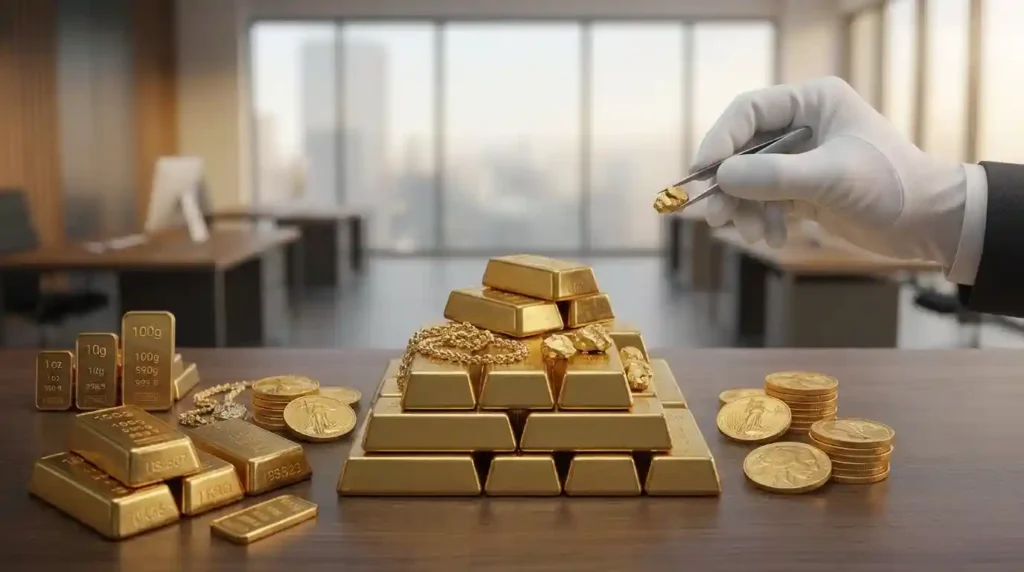
It is Saturday morning in New York City, and you sit down with your coffee. Three websites show three prices for what looks like the same gold bar. Which one is truly the cheapest? Our gold calculator can settle it fast. I have been in that seat many times. Here is the first lesson I learned. The lowest advertised price is not always the lowest final cost. To find the cheapest place to buy gold in the USA, you must compare the spot price, the dealer premium, the product size, shipping, insurance, payment fees, and sales tax where it applies. No single seller wins every day. In this guide, I will show you where to shop, how to compare offers, which products may cost less per ounce, and how to dodge suspicious deals. Please remember that gold prices move, and buying gold carries risk.
Where Is the Cheapest Place to Buy Gold in the USA?
Here is the direct answer. It depends on the product and on that day’s pricing. So the smart move is to compare the final cost for the same amount and the same type of gold. A price that wins on Monday may lose on Tuesday.
Here is a short story. A reader once emailed me about two bars. One cost $40 less on the sticker. She was thrilled. Then she added shipping, insurance, and a card fee. The cheaper bar ended up costing more. She had not done anything wrong. She had just compared the wrong numbers. This is why I always push readers to compare the final checkout total.
Think of it like gas stations. The cheapest one changes by the week. You would not drive across town for a few cents without checking. Gold works the same way, but the stakes are higher. Before you shop, it helps to know how the price of gold is calculated. Then every quote will make more sense.
You do not need to be an expert to start. You only need a few habits. Look at the spot price first, using a source from our gold price guide. Learn what a premium is. Compare the same product across sellers. Write each total on paper. Within a few weeks, you will start to see what a fair price looks like. The value of gold guide can speed this up. That sense of what is normal is your best tool.
Online bullion dealers
Online dealers are a great starting point. You can compare prices, premiums, payment discounts, stock, and delivery terms from your couch. You do not have to drive to several stores.
But read the fine print. A low listed price may depend on paying by bank wire. It may also need a minimum order. So check the delivery date, the insurance, the return rules, and the dealer’s name in the market. I always check these before I add anything to a cart.
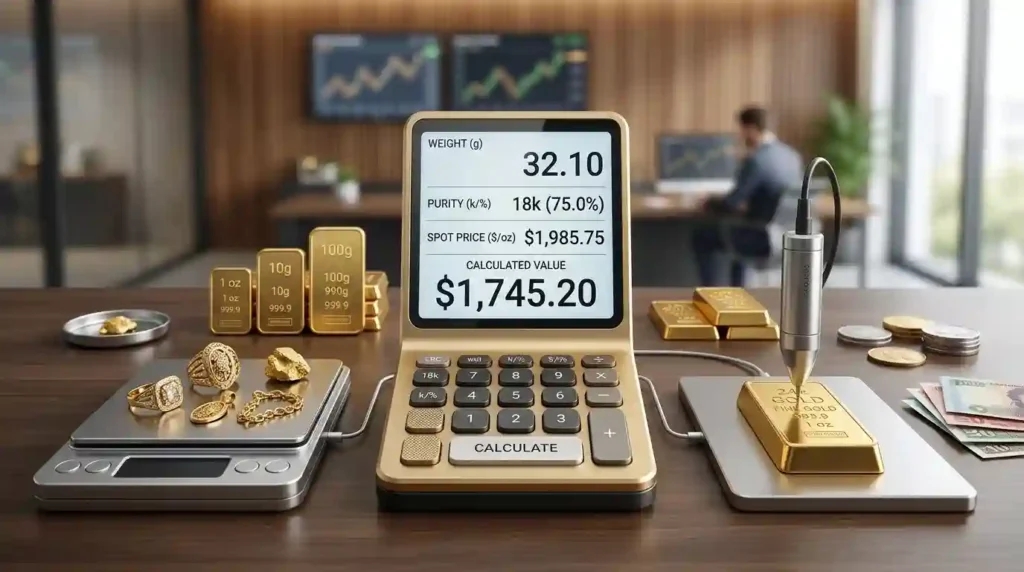
If you want a quick way to test any quote, try our gold calculator. It helps you find the premium in seconds.
Dealers also differ in how they price. Some run big sales on certain products to bring in new buyers. Others keep steady premiums all year. Some give lower prices for bank wires or checks. Others give lower prices for large orders. None of this is wrong. But it means the cheapest seller for a small coin may not be the cheapest for a large bar.
Local coin shops and precious metal dealers
A local shop can be a strong choice. You can hold the item, ask questions, and skip the shipping wait. You also avoid delivery risk.
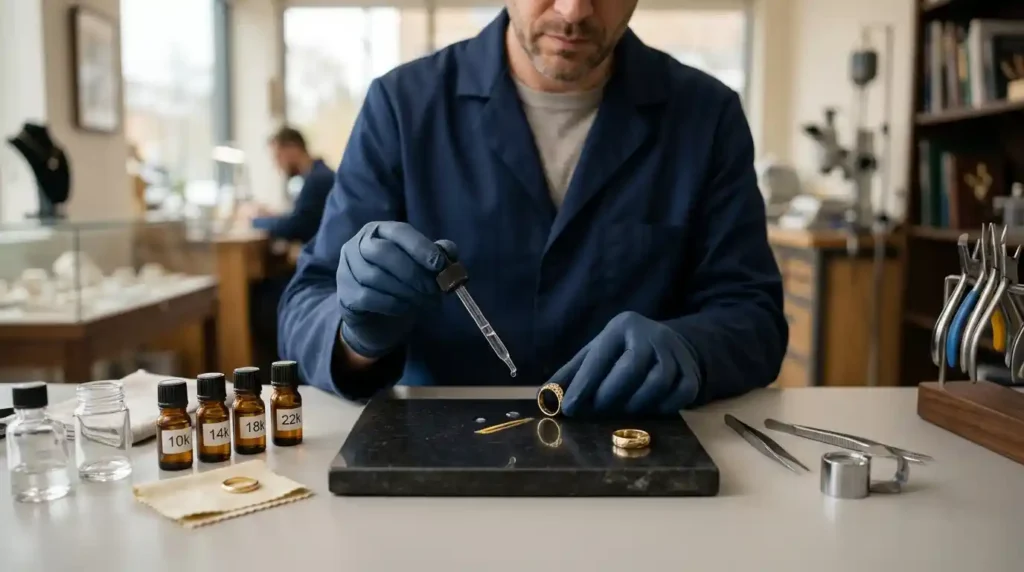
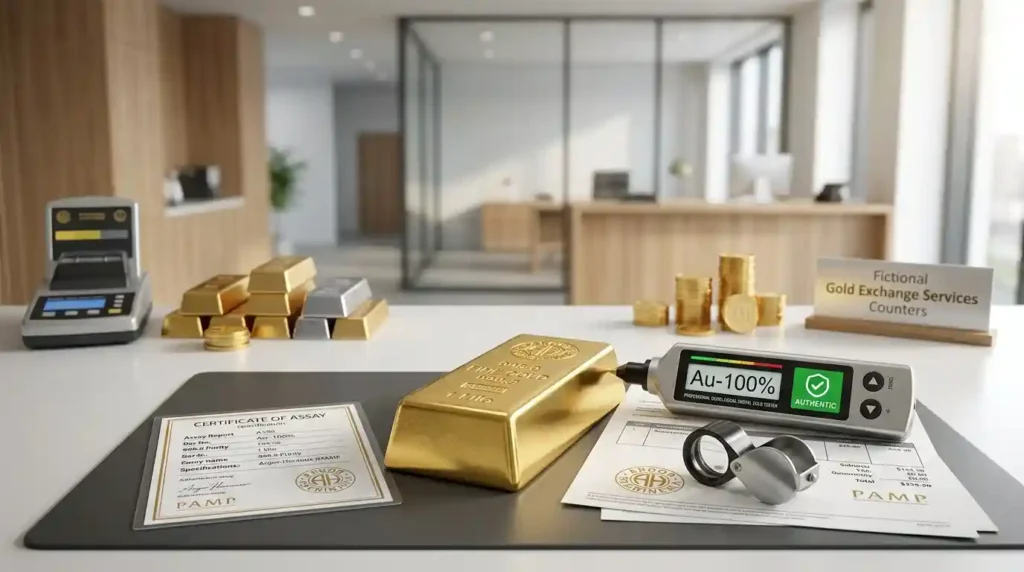
Get at least two or three written quotes. Ask if the price includes taxes, testing, or other fees. Then verify the weight, purity, and authenticity of the product before you pay. A good shop owner will not mind. In my experience, the best ones enjoy teaching new buyers.
Walk in with a plan. Know the spot price for the day. Know the product you want. Ask for the price in writing. Then say you are comparing a few shops. A fair dealer will not be upset. If a shop pushes you to buy right away, that is worth noting. Cash payments may also change the price, so ask how the quote changes by payment type.
Official U.S. Mint bullion distributors
The U.S. Mint does not sell American Eagle bullion coins directly to the public. It sells them to authorized purchasers. Those firms then supply the wider market.
Buying through a recognized channel is a good sign. But it does not promise the lowest retail price. The U.S. Mint publishes a list of authorized purchasers on its site. The Mint also notes that it does not endorse or guarantee the outside businesses on that list. So use it as a starting point for research, not as a final stamp of approval.
One more point on the Mint. Its coins reach the public through many layers. A coin may pass from the Mint to an authorized purchaser, then to a dealer, then to you. Each layer adds a cost. So the price you see is not the Mint’s price. It is the end of a chain. That is also why premiums differ so much from one seller to another.
Buying gold from a private seller
Private sales can look cheap. But they carry extra risk. If a bar or coin is fake, misdescribed, or never delivered, you may have little help.
If you go this route, get independent testing. Meet in a safe place. Avoid cash deals with strangers, rushed meetups, and sellers who refuse to let you verify the gold. A bargain is not a bargain if the gold is not real. Our guide to gold buying scams shows what to watch for.
If you must buy privately, ask for the original box and papers. Check the weight on a scale that reads to 0.01 gram. Ask a local dealer to test the item before you pay. Many shops will do this for a small fee. Never feel rushed. A real seller will give you time. A fake seller will tell you someone else is coming.
Best Places to Compare Gold Prices Online
You want real places to begin, not just general advice. So here are the types of resources I use. I will not claim that any one seller is always the cheapest. That would be untrue. Prices shift every day.
Price-comparison websites
Comparison sites show prices from several dealers for similar products. They save time. One example is FindBullionPrices, which compares gold bullion listings and prices.
Still, always confirm the final price with the seller before you buy. Check when the comparison data was last updated. Check that the item is in stock. A listing on a comparison site is not proof of seller quality. It is also not a promise about the checkout total.
I use comparison sites as a map, not as a guide. They point me to the best few options. Then I go to each seller’s own site and run the full numbers. This two-step method keeps me from acting on stale data. It only takes a few extra minutes. It is worth it for any purchase of real size.
Established online bullion dealers
To compare dealers fairly, use the same coin or bar. Use the same weight, the same purity, and the same delivery address. Well-known names to research include APMEX and SD Bullion. Both appear in the U.S. Mint’s authorized purchaser information.
Being on that list is not a government endorsement. It is also not a promise of the lowest consumer price. Check each seller’s payment terms, buyback policy, return rules, customer support, and shipping insurance. Our post on gold price sources explains where live quotes come from.
Pay attention to how each dealer handles its prices. Some update by the minute with the market. Others update less often. If the dealer’s price lags, it may look cheap at the wrong time. Compare quotes at the same moment, not hours apart. A quick screenshot of each one helps you keep a clean record.
How to confirm that an online gold deal is genuinely cheaper
Compare the exact same product. Do not compare any gold item of the same advertised weight. A new coin and a used one are not the same. A damaged item is not the same either.
Then check the condition. Is it new, secondary market, collectible, or in a different state? Add payment fees, shipping, insurance, and tax. And check the checkout price right before you pay, because spot prices and stock can change in minutes.
Watch for add-ons in the cart. Some sites add insurance or a handling fee by default. Others offer a special case or capsule at an extra cost. These are small, but they add up. If you do not need them, take them out. Also check if the tax rules in your state apply. Rules differ, so ask the seller or a tax pro if you are unsure.
The table below compares online and local buying. Convenience and sticker price are only part of the choice. A fair comparison includes every cost and your ability to check the gold.
Table 1: Online vs. local gold buying
| Factor | Online dealer | Local dealer |
|---|---|---|
| Price comparison | Easy to compare multiple listings | Requires calls or visits |
| Shipping | May add shipping and insurance | Usually no delivery charge for in-person pickup |
| Inspection before purchase | Depends on seller policy and product | Often possible in person |
| Payment options | Vary by seller; some methods cost less | Vary by store |
| Return process | Depends on terms and market movement | Depends on store policy and local law |
| Best next step | Compare checkout totals | Get a written, itemized quote |
Is Gold Cheaper Online or at a Local Store?
Neither channel always wins. I have seen both beat the other. The key is to calculate the total price, not to assume. Do not let habit pick for you. Let the numbers pick.
When online gold buying may cost less
Online, you can compare many sellers fast. Some dealers set different prices by payment method or order size. Stock lists make it easy to compare common bars and bullion coins.
But shipping, insurance, and delivery safety still matter. A cheap price can lose its edge once the box fee is added. And you must be home, or use a safe pickup point, to receive the package.
When a local gold dealer may be the better choice
A nearby shop may offer easy pickup and hands-on inspection. You do not wait for shipping if the item is in stock. You can ask about the exact product, the packaging, and how it is authenticated.
Still, count your own costs. Parking, travel time, and local taxes can change the total. A shop ten miles away may cost you more in gas and time than you save.
There is another point. A local shop may be open on a day when the market moves. You can lock the price in person. Online, the price can change between your cart and your payment. This is a small edge for local buying. It matters most on volatile days.
How to compare two offers fairly
Follow a simple routine.
- Choose the same product and the same quantity.
- Use the same day’s spot price.
- Add all fees and any taxes.
- Compare final checkout costs, not the headline price.
- Think about how easily you could resell the product later.
This routine keeps me honest. When I skip a step, I often fool myself. Our guide on what first-time gold buyers should check adds more steps for beginners.
One more tip is to keep a simple sheet. List the seller, the product, the price, the shipping, the fees, and the total. Add the date and time. After a few comparisons, the best deal will stand out. The sheet also helps if you want to buy again later. You will know where you found the best price last time.
Which Gold Products Are Usually Cheapest to Buy?
The product can affect the premium as much as the dealer does. The amount of gold, the cost to make it, and the demand for resale all matter. Let me walk through the main types.
Gold bars
Standard bullion bars can have lower premiums than some collectible items. Common sizes are 1 ounce, 20 grams, 50 grams, and 100 grams. Larger bars may cost less per gram. But they need a bigger payment up front.
Buy from a reputable seller. Verify the purity, the weight, and the packaging. If a bar is sealed, keep it sealed until you are sure you will hold it. A broken seal can hurt the resale price.
Some bars come with an assay card. This card shows the weight and purity, and it matches a serial number on the bar. Keep the card with the bar. If you sell later, the buyer will want to see it. Do not lose it. A bar without its card may sell for less, or take longer to sell.
Gold bullion coins
Common bullion coins include the American Gold Eagle, the American Gold Buffalo, the Canadian Gold Maple Leaf, and the South African Krugerrand. Recognized coins are easy for buyers and dealers to identify. But their premiums vary.
Some coins hold one troy ounce of gold. Others hold a different amount. So compare the actual fine gold weight, not just the coin’s size. Also, do not assume a government coin is always cheaper than a bar. Sometimes the bar wins. Sometimes it does not.
Why do coins sometimes cost more? Many coins are legal tender. They have a recognized design. Buyers pay extra for that ease of sale. Bars may be plainer. But some bars come from famous refiners, and those can carry a premium too. The only way to know is to run the numbers for the exact items you want.
Fractional gold coins and small bars
Smaller products often cost more per ounce. Making and shipping many small pieces costs more than making one big one. That cost shows up in the price.
Still, small pieces can make sense. You may have a smaller budget. Or you may want smaller units for resale later. Just compare the premium per ounce, not only the total price at checkout. Our post on gold price conversions shows how to put every size on the same basis.
Here is a quick example. Say a 1 gram bar costs $140 when spot value is about $96. The premium is about 45%. A 1 ounce coin at $3,150 has a premium of 5%. The small bar costs far more per gram. This does not make the small bar a bad buy for everyone. But it shows why you should compare the premium, not only the price.
Collectible and proof coins
Collectible value can include rarity, condition, and demand beyond the gold content. If your goal is the lowest cost per ounce, start with plain bullion first.
Do not pay a large collectible premium unless you know what you are buying. The extra price may not come back when you sell.
Proof coins are made for collectors. They have a special finish and fancy packaging. Their price rests on design and demand. If collector interest fades, the price can drop. A plain bullion coin of the same gold content may sell more easily. If your goal is gold weight at a fair cost, start with bullion. This table shows general trends. They are not fixed rankings. Actual premiums vary by seller, product, and market.
Table 2: Gold products and what to compare
| Product | Potential advantage | Main trade-off |
|---|---|---|
| Larger gold bar | May have a lower premium per gram | Higher upfront cost |
| 1 oz bullion coin | Common, recognizable format | Premium varies by coin |
| Fractional coin | Lower purchase amount | Often higher cost per ounce |
| Small gold bar | Lower upfront cost | May have a higher premium per gram |
| Collectible coin | Possible numismatic appeal | Collectible premium may not be recovered |
How to Calculate the Cheapest Gold Price
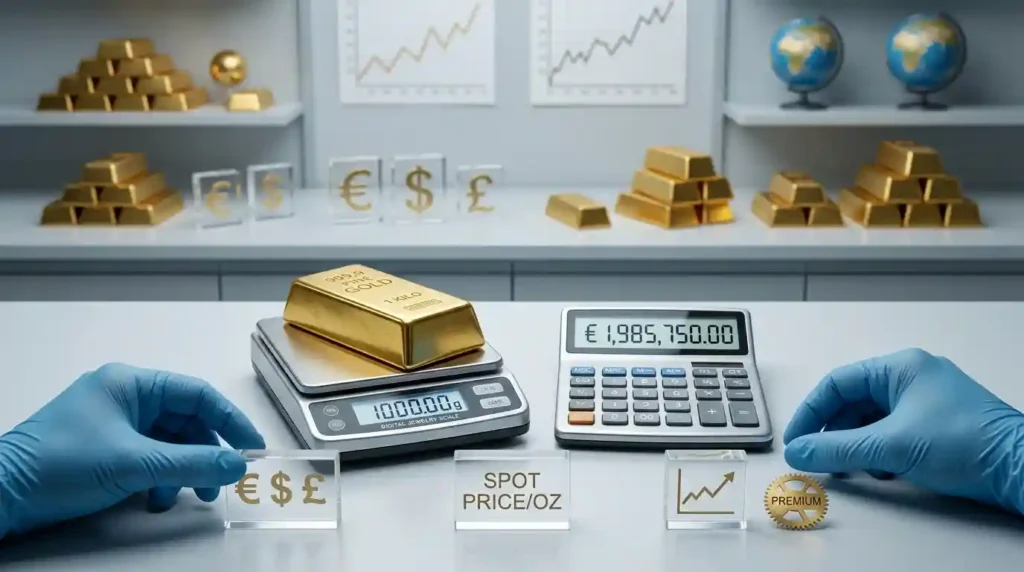
This is where you can beat the guesswork. I turn each listing into an apples-to-apples number. You can do it with a calculator or a simple sheet. It takes just a few minutes. The math uses a hypothetical spot price of $3,000 per troy ounce. It is for teaching only, and it is not a live quote.
First, find the current spot price
Check a trusted market data source. Confirm that the quote is in U.S. dollars per troy ounce. Write down the time stamp, because prices can move during the day.
If you need help with sources, read our post on gold price data and update times. It explains how often common sources refresh.
Next, calculate the gold’s spot value
Use this formula for a product with a known fine gold weight.
[ \text{Spot value} = \text{Spot price per troy ounce} \times \text{Fine-gold weight in troy ounces} ]
If the product is listed in grams, divide the grams by 31.1034768 to get troy ounces. For example, a 20 gram bar holds about 0.643 troy ounces. At $3,000, its spot value is about $1,929.
For coins with less than one troy ounce, use the stated gold content. Do not use the coin’s total physical weight. Some coins hold alloy metals too.
For example, some coins are 22 karat. That means they hold about 91.67% gold. A coin may weigh one ounce but hold slightly less gold than a coin that is 24 karat at the same weight. Always read the fine gold weight on the product page. If you want the karat math, see how gold purity is calculated. If you need the unit math, see our guide to comparing grams, ounces, and pennyweights.
Then calculate the dealer premium
Use this formula.
[ \text{Premium %} = \frac{\text{Product price}-\text{Spot value}} {\text{Spot value}} \times 100 ]
The premium shows how much the product costs above its spot value. Try an example. Say a 20 gram bar sells for $2,000. The spot value is about $1,929. The gap is about $71. Divide $71 by $1,929. That gives a premium of about 3.7%.
Now compare that with a 1 ounce coin at the same spot price. Say it sells for $3,150. The premium is $150 divided by $3,000, which is 5%. In this hypothetical case, the bar costs less over spot than the coin. That may flip with another seller or another day. This is why you run the math every time.
If a seller’s price leaves out shipping or fees, run the math twice. Once with the listed price. Once with the final checkout total. The second number is the real one.
Finally, compare the total cost
Add the product price, shipping, insurance, payment fee, and any tax. Keep the product type, weight, and fine gold content the same on both sides.
Check if a discount needs a certain payment method. Then work out the cost per gram or per troy ounce. That lets you compare different sizes on a fair basis. Our guide on how to calculate gold price per gram shows this step in detail.
The next table is a hypothetical example, not a current dealer quote. It shows why the lowest sticker price and the lowest final cost are not always the same.
Table 3: Example of comparing two gold offers
| Cost component | Seller A | Seller B |
|---|---|---|
| Same gold product | $3,100 | $3,080 |
| Shipping and insurance | $0 | $25 |
| Payment fee | $0 | $0 |
| Example tax, if applicable | $0 | $0 |
| Total example cost | $3,100 | $3,105 |
Seller B’s advertised price is $20 lower. But its total is $5 higher. That is the whole lesson in one table. Real taxes and shipping depend on your location, the product, and the seller.
Sales tax rules for gold differ across the country. Some states exempt certain bullion. Others tax it. Some set a minimum purchase for the exemption. Because rules change, check with your state tax office or a tax pro. Do not rely on a seller’s word alone. Add any tax you may owe to your total before you compare. Use our gold price calculator to repeat this with current prices.
Finding the Lowest Gold Premium: What to Know
Two sellers can offer the same product at different markups. Knowing how premiums work helps you spot a fair offer. It also helps you ignore vague claims like “wholesale prices” or “no markup.” Those phrases tell you nothing on their own.
What is a gold premium?
A premium is the amount you pay above the gold’s spot value. It can cover minting, making, distribution, and dealer costs. It varies by product, size, demand, and seller.
Think of it as the cost of turning raw metal into a product you can buy and hold. Some of that cost is fair. Your job is to see how much, and to compare it with other sellers. For a wider look at what drives value, see our guide to the value of gold.
Why the cheapest premium is not always the best deal
A low advertised premium may leave out shipping or payment fees. A product may be out of stock. Or it may be in a different condition than you expected.
Also, think about the way out. A dealer’s resale or buyback terms change the real cost of owning gold. So compare the total purchase price and the dealer’s current buyback quote.
A simple way to see this is the spread. Say a dealer sells a coin for $3,150 and buys the same coin for $3,020. The spread is $130. If you bought and sold right away, you would lose that amount. The market would need to rise by about that much for you to break even. A smaller spread is a better sign. A low premium with a poor buyback may cost you more in the end.
When a discount is worth considering
Some discounts are real. Check if the discount needs a bank wire, a minimum purchase, or another condition. Confirm the payment steps on the seller’s official website.
Never send money based on an unasked message or pressure from a salesperson. And compare the discount with any extra cost or loss of ease. A small saving is not worth a big risk.
I also suggest you ask about price locks. Some dealers hold your quoted price for a short time while your payment arrives. Others do not. If the price is not locked, the market can move before you pay. Ask what happens if the price changes. A clear answer shows a seller you can trust. See our notes on the price of gold for why prices move.
How to Avoid Gold Buying Scams in the USA
Low prices are tempting. But a shady offer can cost far more than a normal premium. This section helps you check sellers and spot pressure before you send money. For a deeper dive, read about gold valuation scams too.
Red flags to watch for
Watch for these signs.
- Prices far below the market with no real reason.
- Promises of sure profit, or claims that gold cannot lose value.
- Pushy sales calls, unasked emails, or social media messages.
- Unclear fees, vague delivery dates, or missing written terms.
- Sellers who will not state the product’s weight and purity.
If you see one of these, slow down. If you see two, walk away. I have never regretted walking away from a pushy seller.
Scammers also copy real dealers. They build sites that look the same, with small changes in the web address. Always type the dealer’s address yourself. Do not click links in emails or texts. Check that the phone number matches the one on the official site. These steps take two minutes. They can stop a very costly mistake.
How to verify a gold dealer
Check the business’s physical address, its history, and its complaint record. Search for independent reviews. Do not rely on testimonials alone, since those can be written by the seller.
Verify the product details and how the item is authenticated. Get the final price, fees, delivery terms, and return policy in writing. For a major purchase or one tied to retirement money, seek qualified independent advice. Our gold buying scams guide has a longer checklist.
Be careful about requests for gift cards, crypto, or wire transfers to new accounts. Real dealers may accept wires, but they give clear, written steps on their official site. If instructions change at the last minute, call the dealer on a known number. A short call can protect your whole payment.
What U.S. experts advise
The U.S. Commodity Futures Trading Commission, or CFTC, has a consumer advisory called “10 Things to Ask Before Buying Physical Gold, Silver, or Other Metals.” It advises buyers to compare dealer premiums and fees before they commit. It also tells buyers to get all costs in writing.
The agency warns about high-pressure sales tactics and costly markups. This is general consumer information. It is not personal investment advice. Please read the advisory on the CFTC site and use it as a checklist.
The advisory also reminds buyers that physical gold is not insured like a bank deposit. If your gold is lost or stolen, you may not get it back. Plan for storage and home insurance. Ask your insurer what it covers. Our guide on first-time buying checks also covers storage and insurance.
What to Check Before Buying Gold Online
Before you check out, verify the product and the deal, not just the price. A short checklist makes this easy. I run through it every time, even for small orders.
Product details
Confirm the weight, the purity, the maker or mint, and the exact product name. Check if the item is new, secondary market, or collectible. Make sure the listed price matches the product in your cart.
Small mix-ups happen. A listing may show one coin and the cart may hold another. A quick look at the cart before you pay can prevent that.
Also check the mint year. Some years carry a higher price. If you do not care about the year, ask for a random year to save money. Many dealers offer this. Just confirm it in writing so you know what you will receive. For help reading specs, see our guide on how gold purity is calculated.
Payment, delivery, and returns
Review the payment options, and any discounts or fees. Check shipping, insurance, signature needs, and delivery estimates. Read the return terms with care. Some sellers do not refund if the market moves.
Keep the order email and all records. Take screenshots of the listing and the checkout. If a dispute comes up, these records help you a lot.
Resale and buyback terms
Check if the seller buys back the same products. Ask for the current buyback price. Do not assume it matches what you paid.
The gap between a dealer’s selling price and its buying price is called the spread. It is a real cost. It also sets how far the gold price must rise for you to break even. A wide spread means a longer wait. Plan for it before you buy.
If you plan to hold for many years, the spread matters less. If you may sell within months, it matters more. Think about your time frame. Then pick products and dealers that fit it. This one choice can change your cost more than any sale price.
Frequently Asked Questions About Buying Cheap Gold in the USA
Here are short, direct answers to common questions. They follow the same price-comparison method used above. For more topics, browse our gold blog.
What is the cheapest place to buy gold in the USA?
No single seller is always cheapest. Compare current prices for the same product across reputable online dealers and local shops. Include all fees.
Is it cheaper to buy gold online or in person?
Either can be cheaper. Online dealers make price checks easy. Local shops may save you shipping and allow in-person checks. Compare final costs.
Are gold bars cheaper than gold coins?
Gold bars can have lower premiums at some sizes. But the result depends on the seller, the brand, and demand. Compare the premium per ounce for products with the same fine gold content.
Does the U.S. Mint sell gold coins directly to the public?
No. The U.S. Mint distributes bullion coins through authorized purchasers. They then supply the wider retail market.
How can I tell if a gold price is fair?
Check the current spot price. Work out the product’s fine gold value. Calculate the premium. Then add shipping, insurance, payment fees, and any tax. Our gold value guide helps with the first steps.
Is buying gold at spot price possible?
Retail buyers of physical gold usually pay a premium or other costs above the metal value. If an offer says spot, read the conditions with care. Look for extra fees.
Are small gold bars a good choice for beginners?
They can fit a smaller budget. But they may cost more per gram than larger bars. Compare premiums and think about future resale needs.
Can I buy gold from Costco or another big-box retailer?
Availability, selection, and prices can change. If a big-box store sells gold, compare the exact product and the final cost with established bullion dealers. Do not assume the retailer is cheapest.
Big-box stores may sell a few products at set prices. Those prices may not move as fast as the market. When gold rises, the store price may lag and look cheap. When gold falls, the store price may look high. Check the live spot price and run the premium math before you decide.
Final Recommendation
I have spent years helping people read gold quotes and compare real costs. My advice on the cheapest place to buy gold in the USA is simple. Do not trust one headline price. Compare the same product from a few reputable sellers, and use the gold calculators we reviewed. Work out the premium over spot. Add shipping, insurance, fees, and tax. Check the buyback terms before you pay. You can learn more about me on my author page. Gold prices rise and fall, and no seller can promise a profit. A calm, careful buyer almost always pays less than a hurried one.
Compare Gold Prices Before You Buy
Do not let one advertised price decide for you. Take a few minutes to run the real numbers. That small effort can save you real money. It can also keep you away from bad deals.
Use the gold price calculator
Follow four short steps with our gold price calculator.
- Enter the current spot price and the product’s fine gold weight.
- Calculate the premium over spot.
- Add shipping, insurance, payment fees, and applicable tax.
- Compare the total against other offers for the same product.
Want to go further? Read our guides on how gold calculators work and the difference between gold price and jewelry price. Compare the gold price, calculate the premium, and check the final cost before you buy. A few minutes of research now can save you money later.